Photo Books · Digital PDF
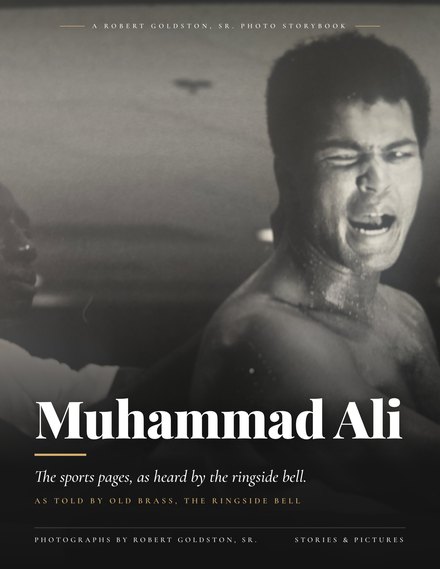
As told by Old Brass, the ringside bell
The sports pages, as heard by the ringside bell.
Old Brass is the bell at ringside. It has one word, and when it speaks, the fighting stops.
From its little shelf by the timekeeper's table it has heard the crowd roar for the Greatest, watched punches traded at close quarters, and argued with Buzz, the basketball horn, about which sport is louder.
Real photographs from ringside and the courts by Robert Goldston, Sr., and a ten-bell salute to a champion.
Every photograph in this book is real, taken by Robert Goldston, Sr. on his travels. The stories are fiction, written as a gift to the photographs; the italic line under each story title tells you what the photograph actually shows.


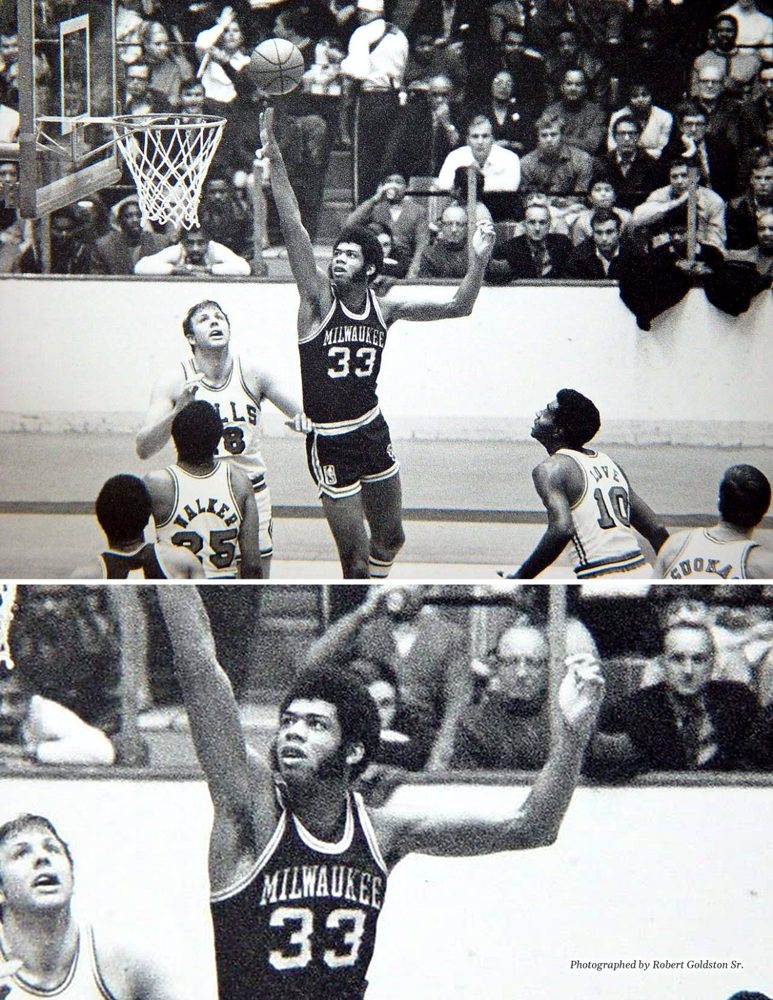
![A basketball player in a Milwaukee jersey, number 33, rises toward the basket while opponents look on. [Name to be confirmed]](assets/shop/books/muhammad-ali-and-the-sports-pages/05.jpg)

Prologue
Ding. That is my name, and also my whole vocabulary, so I make it count. Most people call me Old Brass. I am the bell at ringside in a big city arena. I sit on a little shelf beside the timekeeper's table, and when I speak, grown men in silk shorts stop hitting each other. Nobody else in sports has that kind of power.
My partner is Sal, the timekeeper. Sal has a stopwatch on a string and a little wooden hammer, and he has been striking me at the start and end of every round for longer than either of us likes to count. Three minutes a round. Sal has never been late by so much as a tick.
On nights when there is no boxing, they pack me into a cupboard under the scorer's table and the arena fills with basketball. Those nights belong to Buzz, the electric game horn. Buzz is loud, Buzz is rude, and Buzz thinks a bell is an antique. We do not get along.
Sal keeps the sports pages in that cupboard, along with a stack of photographs, and on quiet nights he reads them out loud to me. These are the pictures. Some of them are of the greatest fighter I ever heard about, and one of them, I am sorry to say, is of basketball. Ding. Round one.
Three spreads from the book: the photograph on one page, its story on the other.
No. 1No. 1
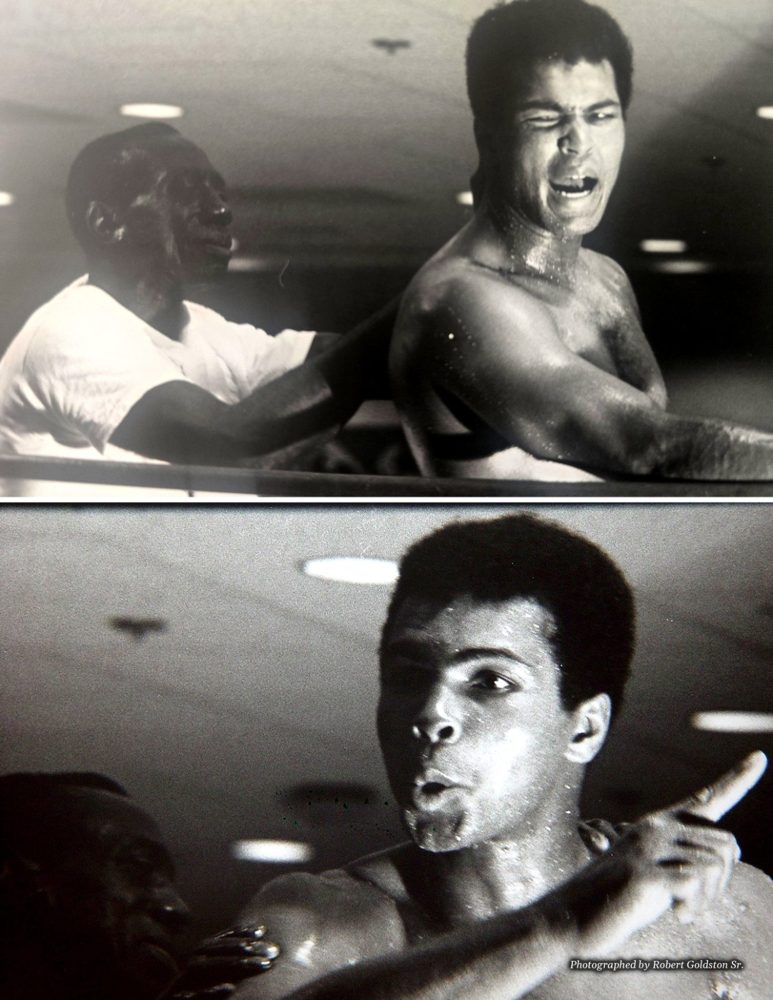
Muhammad Ali at the ropes under low ceiling lights, with a man in a white T-shirt close behind him.
The first picture Sal pulled out was not from a fight night. It looks like a gym, with plain round lights set in a low ceiling, the kind of place where nobody sells tickets and nobody rings a bell. I tried not to take that personally.
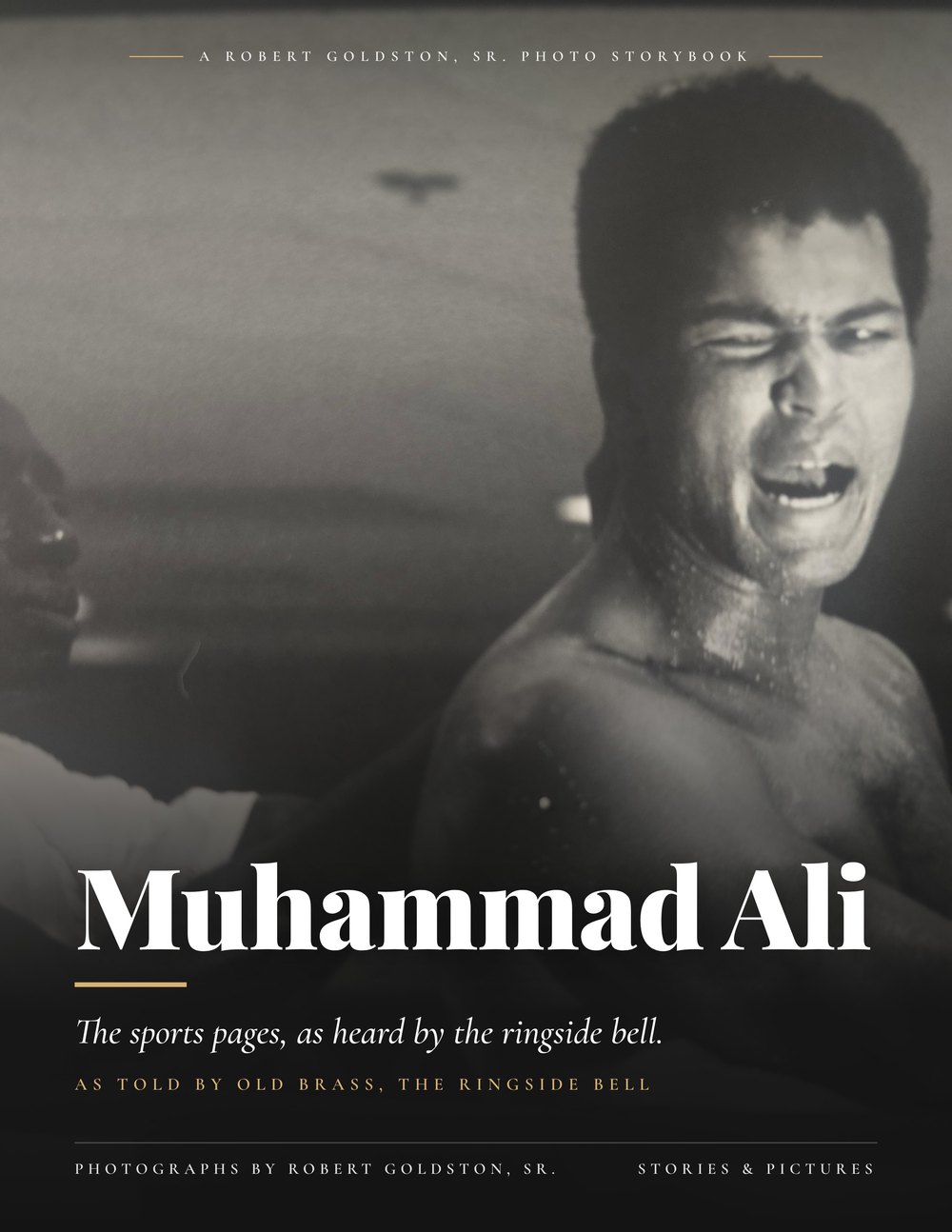
Muhammad Ali is at the ropes, glistening with sweat, his face screwed up in a great squint, one eye shut tight and his mouth wide open. Close behind him stands a man in a white T-shirt with an arm at his back. Whatever was happening in that moment, it was hard work, and every bit of it is in his face.
“He was born Cassius Clay,” Sal told me, “in Louisville, Kentucky, in 1942. Won the Olympic gold medal in Rome in 1960, as a light heavyweight. Eighteen years old.”
I thought about that. At eighteen I was still a lump of brass in a foundry, waiting for somebody to give me a shape and a purpose. He already had both.
… the story continues in the book.
No. 3No. 3
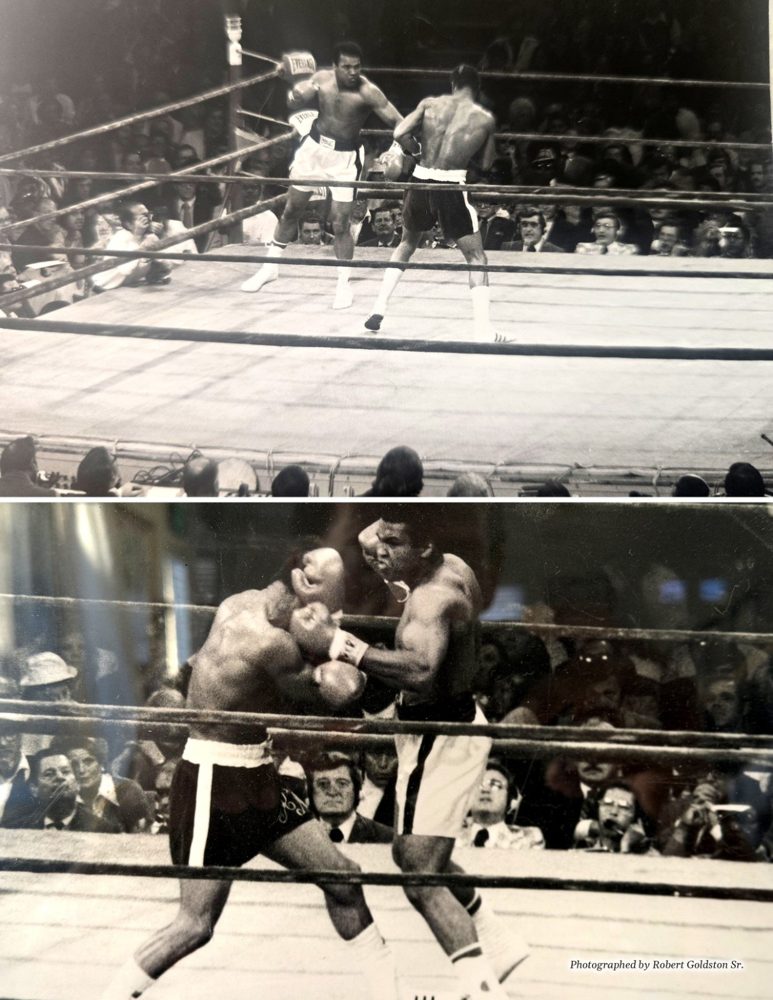
Muhammad Ali in the ring with an opponent, with photographers and spectators at ringside.
Now this is my kind of picture. A real ring, a real crowd, and real ropes, four of them, stretched tight around a bright square of canvas.
Two boxers face each other near a corner. One wears white trunks and has a glove stretched out toward the corner post. The other wears dark trunks and has his back to us, gloves up. Down at ringside, photographers crouch with their cameras, and a man in headphones watches from the press table. Behind them, the crowd fades away into the dark.
Sal tapped the label on this one. Muhammad Ali. “He changed his name in 1964,” said Sal. “And he was the first man to win the heavyweight championship three times.” Three times! I have been struck many thousands of times, but I have never once been struck three times by greatness.
… the story continues in the book.
No. 6No. 6
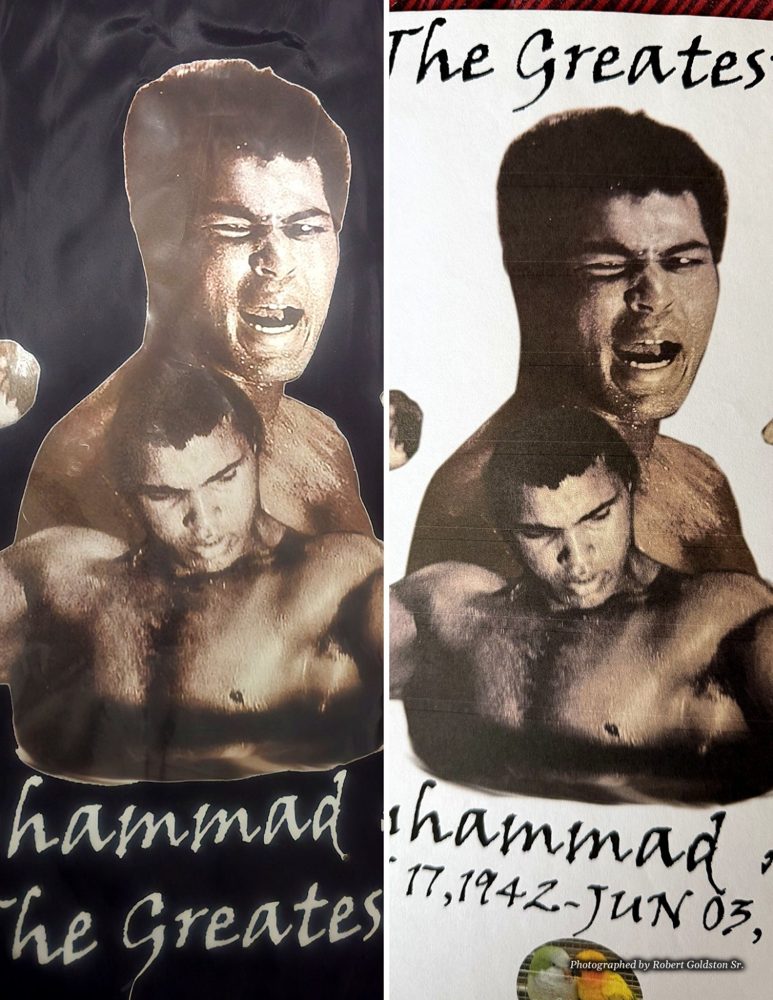
The same “Muhammad Ali, The Greatest” artwork printed on black cloth and on a memorial print marked JAN 17, 1942 to JUN 03, 2016.
The last pictures in Sal's stack are not photographs of a fight. They are photographs of a picture, the same artwork twice. Once on black cloth, and once on a white memorial print. In it, one image of the champion roars with his mouth wide open, and beneath it another stands with both fists raised high. Underneath are the words Muhammad Ali, The Greatest.
On the memorial print there are two dates. January 17, 1942. June 3, 2016. Sal read them out loud very slowly.
“After he beat Sonny Liston in 1964,” said Sal, “he told everybody, I am the greatest.” He smiled. “And people have been agreeing with him ever since.”
In boxing there is a custom called the ten-bell salute. When somebody important to the sport has passed, the timekeeper strikes the bell ten times, slowly, while everybody in the arena stands in silence.
… the story continues in the book.
17 pages, 6 stories, one storyteller. Digital PDF for $2.95.
Choose one book or the whole series.
Check out securely with PayPal or a card.
Download links appear the moment PayPal confirms your payment, with a personal download page you can bookmark.
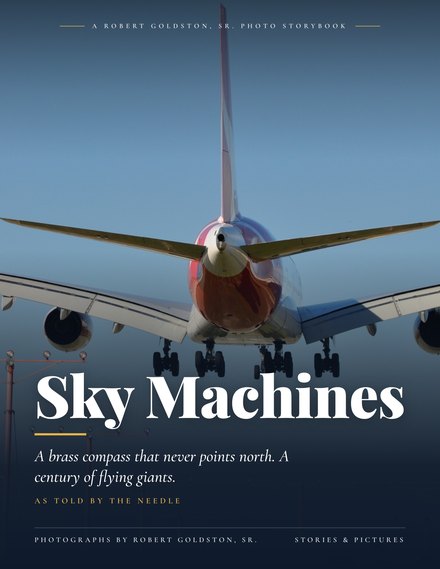
As told by the Needle
A brass needle that never points north, and the great machines it leads to.
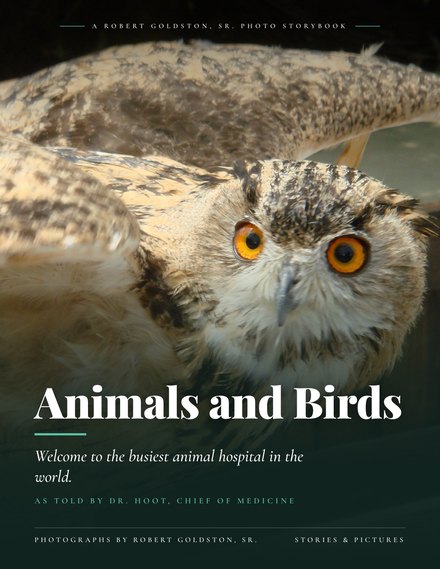
As told by Dr. Hoot, Chief of Medicine
Dr. Hoot, chief of medicine, will see you now. Please do not touch the patients.
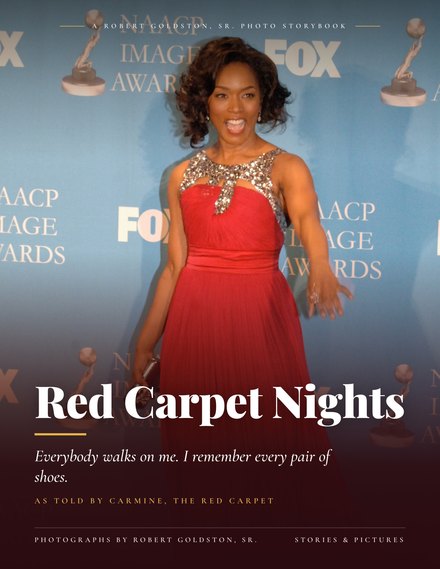
As told by Carmine
Everybody walks on me. I remember every pair of shoes.
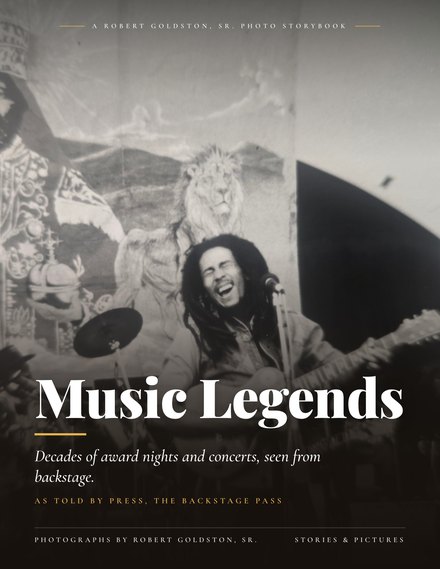
As told by Press, the Backstage Pass
Decades of award nights and concerts, seen from backstage.