Photo Books · Digital PDF
As told by Uncle Lek
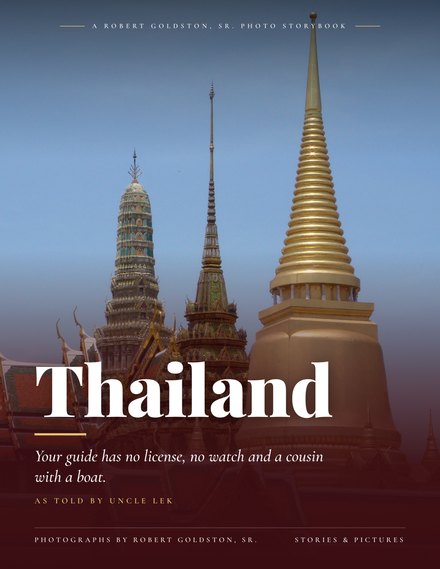
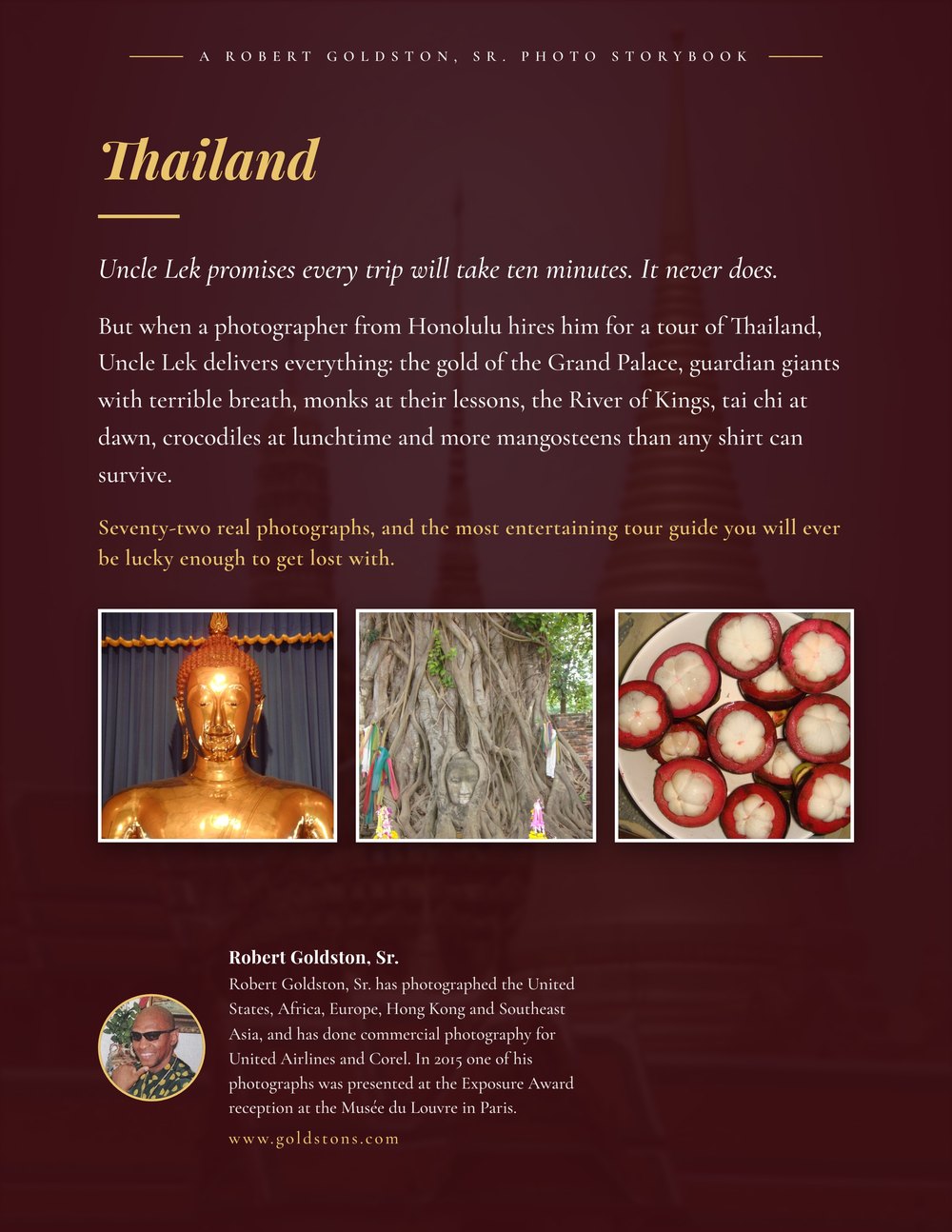
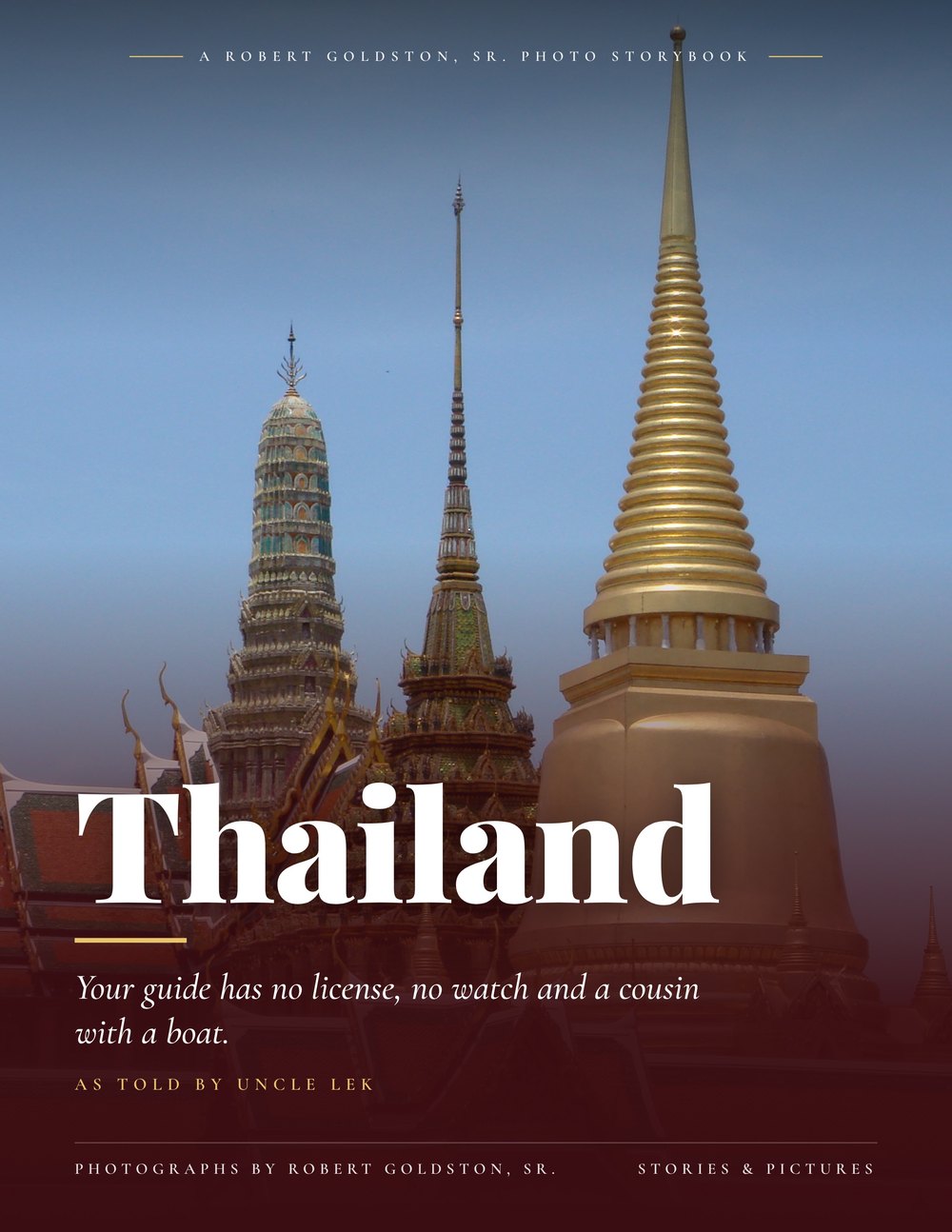
Never licensed, never on time, never boring: Uncle Lek shows you his Thailand.
Uncle Lek has no tour license, a borrowed tuk-tuk and a cousin who always has a boat. When a photographer from Honolulu waits two hours and forty minutes for him in a Bangkok hotel lobby, it is the start of a beautiful friendship.
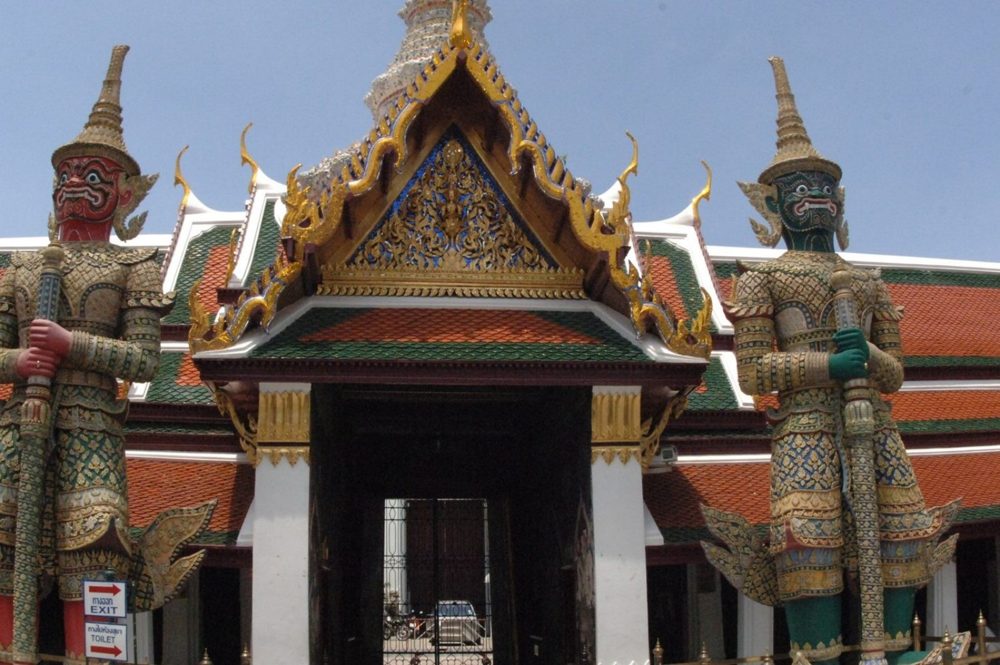
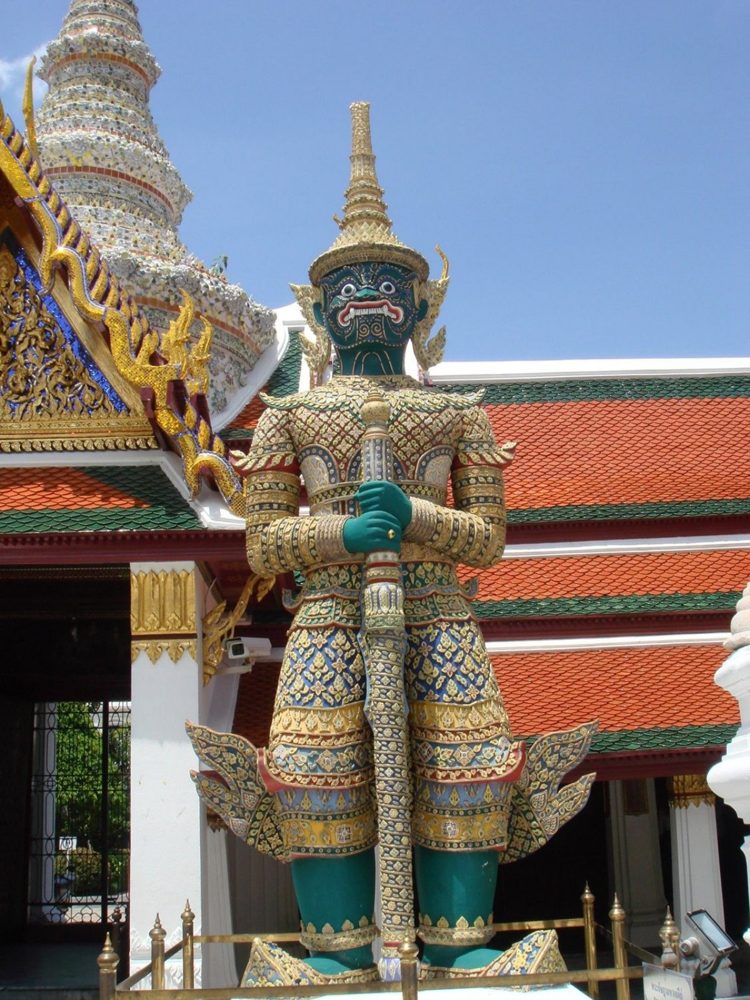
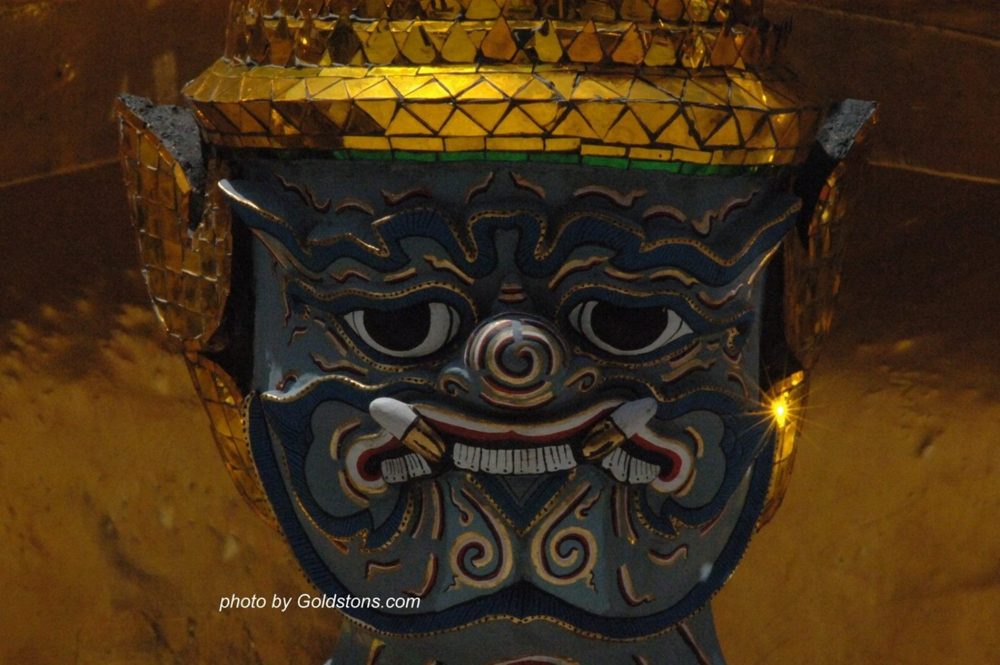
From the gold of the Grand Palace and the giant temple guardians to the Golden Buddha, the river of kings, monks in the classroom, crocodiles, islands and, finally, the food, Uncle Lek shows him everything, and has an opinion about all of it.
Our biggest book: seventy-two photographs across 153 pages. The photographs are real. The stories are Uncle Lek's. Some of them are even true.
Every photograph in this book is real, taken by Robert Goldston, Sr. on his travels. The stories are fiction, written as a gift to the photographs; the italic line under each story title tells you what the photograph actually shows.


Prologue
My name is Lek. Everybody in Bangkok calls me Uncle Lek, including several people who are older than me. I am a tour guide. I have never had a license, never had a complaint, and never once arrived on time. I am proud of two of those things.
My office is a plastic stool beside a fruit cart off Sukhumvit Road. My transport is a tuk- tuk that belongs to a man named Daeng, who lets me borrow it while he is asleep. When we need to travel by water, there is my cousin Boon. Cousin Boon always has a boat. Nobody knows where the boats come from. Nobody asks.
One hot April morning a man from Honolulu stood in a hotel lobby with three cameras around his neck, waiting for a guide who had promised to come at eight o'clock. I came at ten forty. He did not shout. He looked at his watch, then at me, and then he took my picture. I knew right away that we would be friends.
He told me his name once, but I was talking at the time, so I called him the photographer and he answered to it. For many days I showed him my Thailand: the gold, the giants, the monks, the river, the park at dawn, the old capital, the crocodiles, the fruit, the islands and, at the very end, the food.
He photographed all of it. These are his pictures. The stories are mine. Some of them are even true.
Three spreads from the book: the photograph on one page, its story on the other.
No. 1No. 1
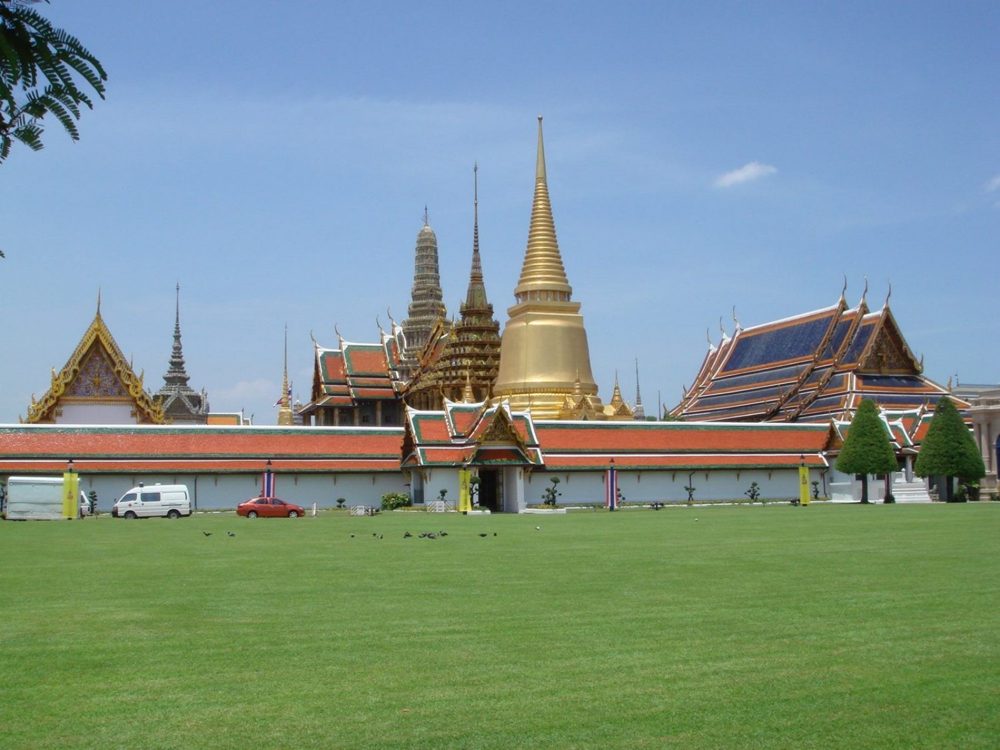
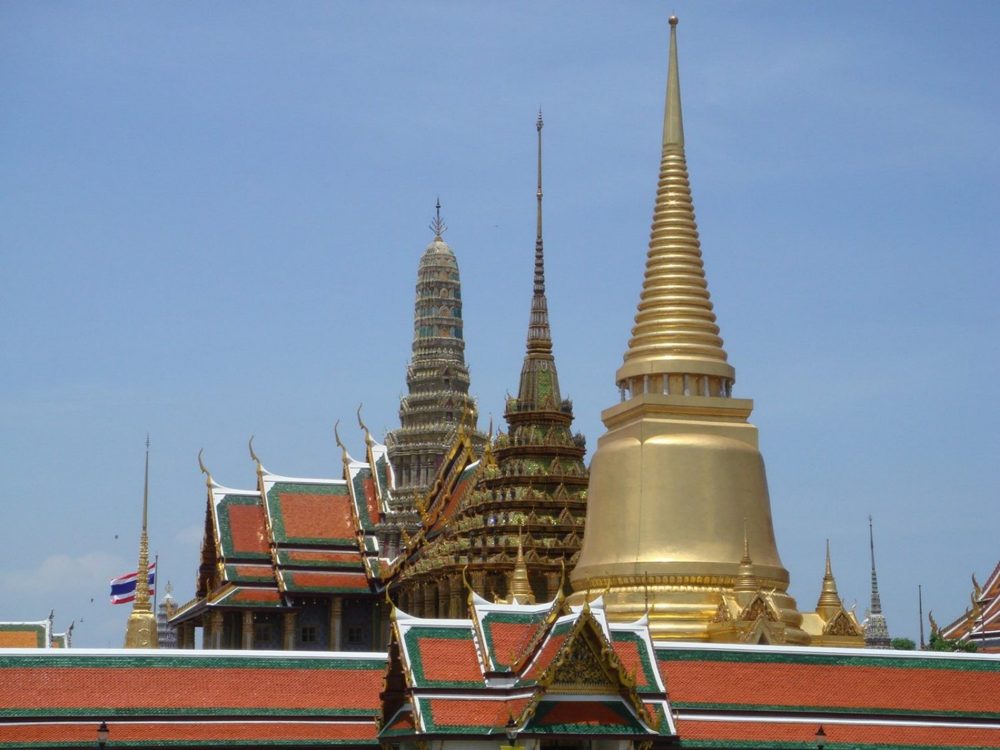
The Grand Palace in Bangkok seen across its lawn, with the golden chedi and spires of Wat Phra Kaew rising above the white walls.
The photographer wanted to see the Grand Palace. I told him it was ten minutes away. It was ten minutes away, if you do not count the traffic, the lunch, my cousin's shop and a short stop to admire a very interesting duck.
We arrived at a quarter to four. The gates close at half past three.
“Patience,” I told him. “The best view is from outside anyway.” So we stood on the grass across the road, and I pointed out everything he could not go into. The white walls, longer than you can walk without needing a drink. The roofs in orange and green, stacked like a fruit stall. And rising above them all, the golden chedi, shining as if somebody had polished it that morning with nothing else to do all day.
I told him I once had tea in there with a king. The king does not remember this. It was a very short tea.
… the story continues in the book.
No. 3No. 3
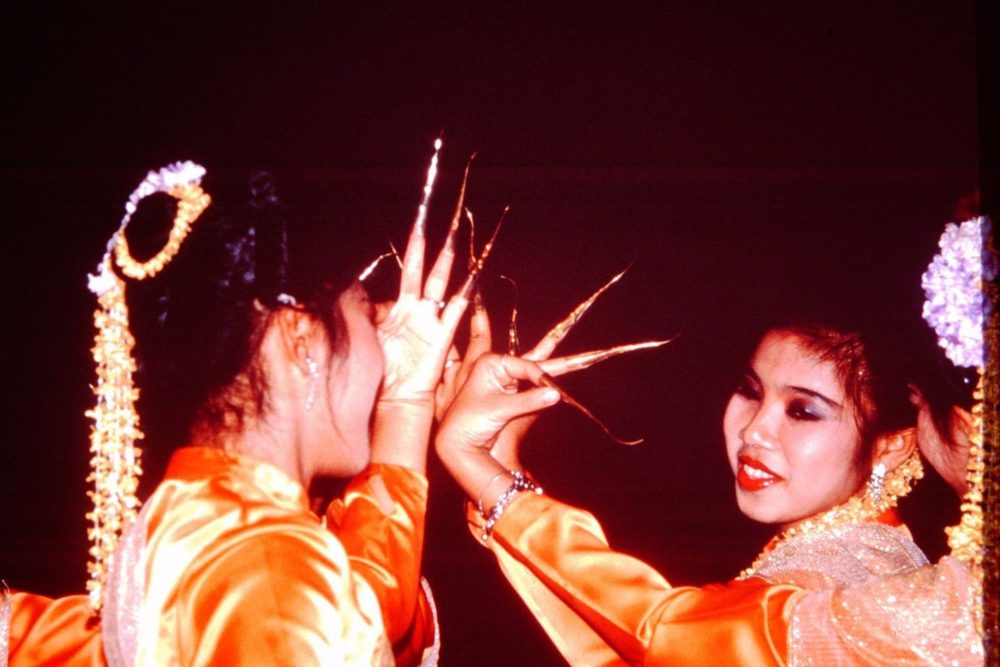
Two Thai dancers in orange silk wearing long golden fingernail extensions.
That evening I took the photographer to a dinner show, because a tour guide must also feed his customer, and also himself.
The dancers came out in orange silk with flowers in their hair. On their fingers they wore long golden nails, and they bent their hands backward in ways that hands are not supposed to go. In the north of Thailand there is a dance called fon lep, the fingernail dance. Lep means fingernail. Lek means small. Only one letter apart, I told the photographer, so I am practically a dancer myself.
Every movement tells a story. A turned wrist is a flower opening. A finger bending back is a bird landing on a branch. The photographer raised his camera and stopped breathing, which is how I knew he liked it.
… the story continues in the book.
No. 23No. 23
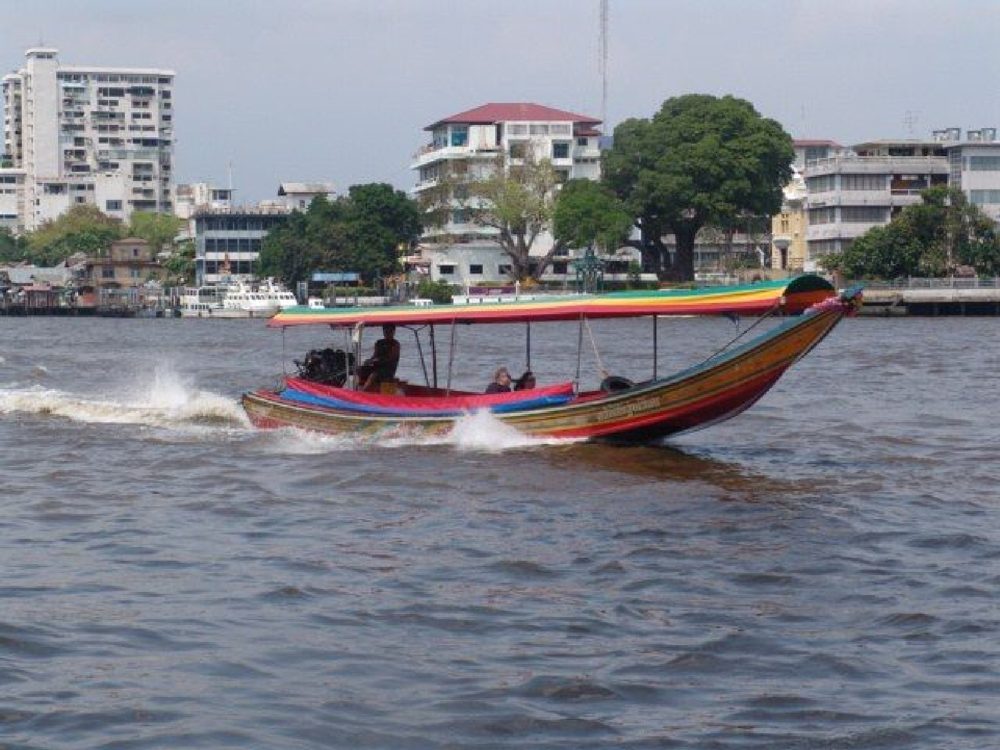
A long-tail boat with a striped canopy speeding across the Chao Phraya River, Bangkok.
Twenty minutes later, a long-tail boat came roaring across the river. It had a striped canopy in red, yellow, green and blue, and a big car engine on a long pole at the back, and at the controls, wearing sunglasses, was my cousin Boon.
“Is that your boat?” asked the photographer.
“That is a boat,” I said. “It is Boon's today.”
Cousin Boon has always had a boat. When we were boys, he had a boat. At his wedding, he arrived by boat. Nobody in the family knows where the boats come from, and every one of them is different. We have stopped asking. It is better for everybody.
Boon pulled up beside the pier, lifted his sunglasses and held out his hand. In it was a single wet flip-flop.
The photographer stared. “Where did you find that?”
“In the river,” said Boon, as if that were obvious.
… the story continues in the book.
153 pages, 72 photographs, one storyteller. Digital PDF for $2.95.
Choose one book or the whole series.
Check out securely with PayPal or a card.
Download links appear the moment PayPal confirms your payment, with a personal download page you can bookmark.
As told by the Needle
A brass needle that never points north, and the great machines it leads to.