Photo Books · Digital PDF
As told by the Needle
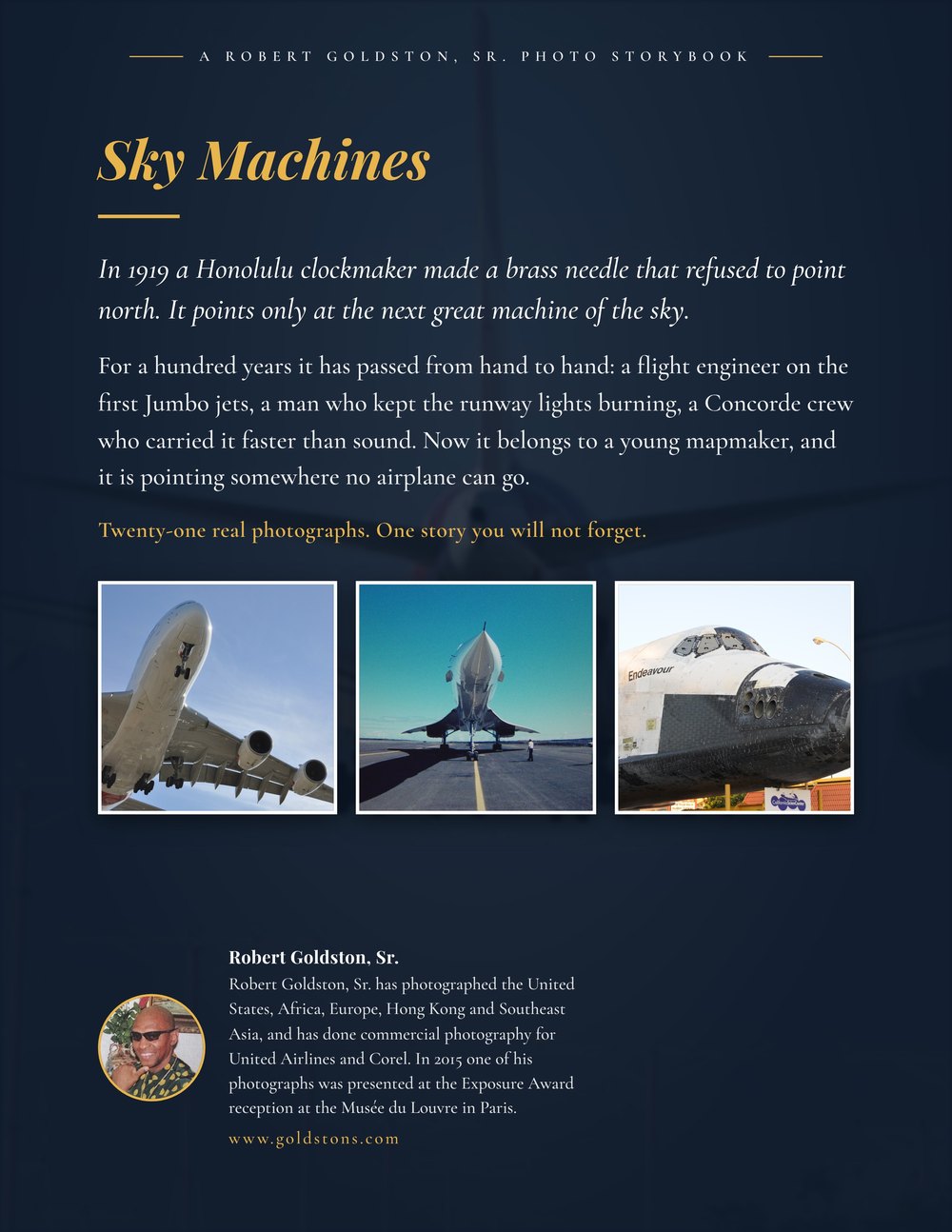
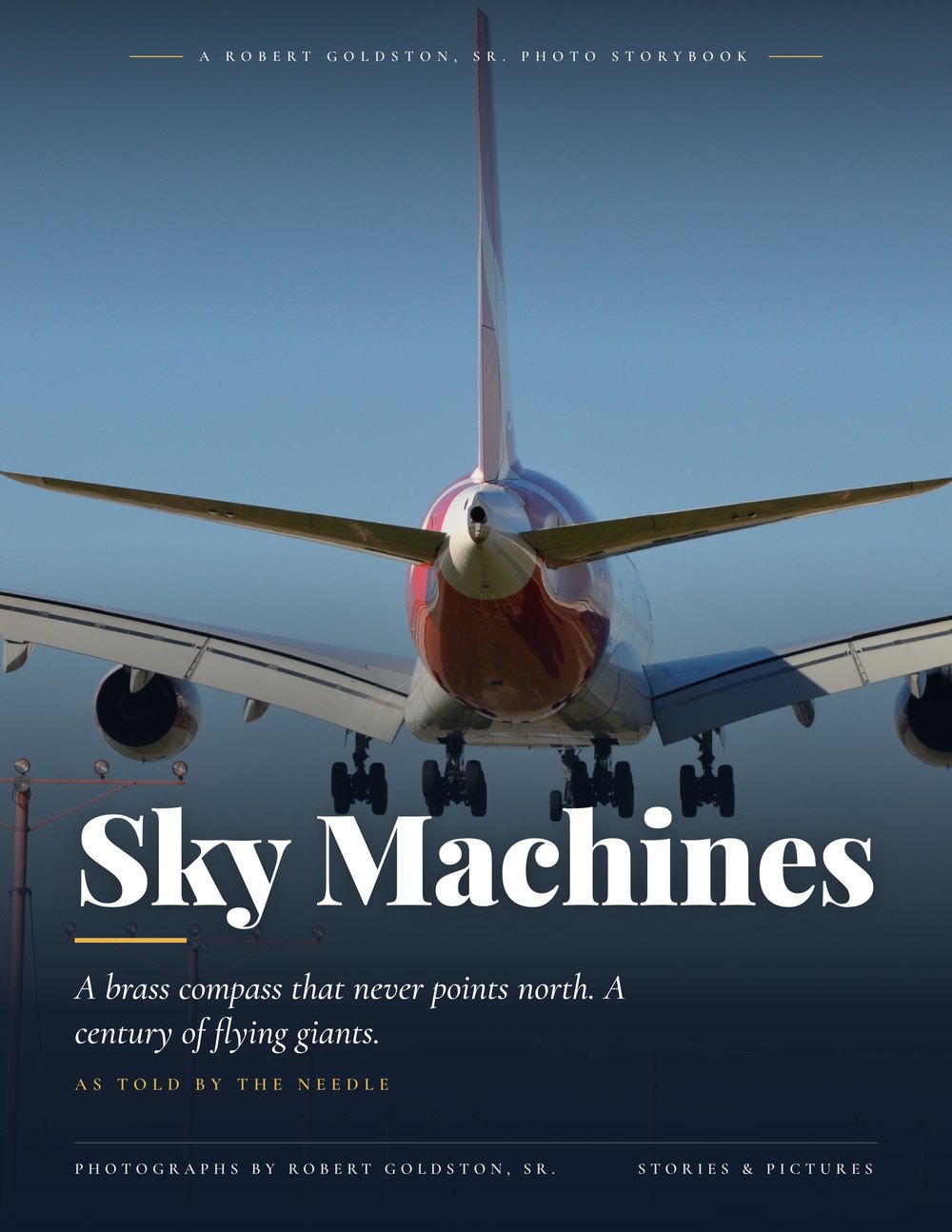
A brass needle that never points north, and the great machines it leads to.
In 1919 a Honolulu clockmaker cast a brass needle from the propeller of a pioneering airplane and made an impossible promise: it would never point north. It would point to the next great machine of the sky.
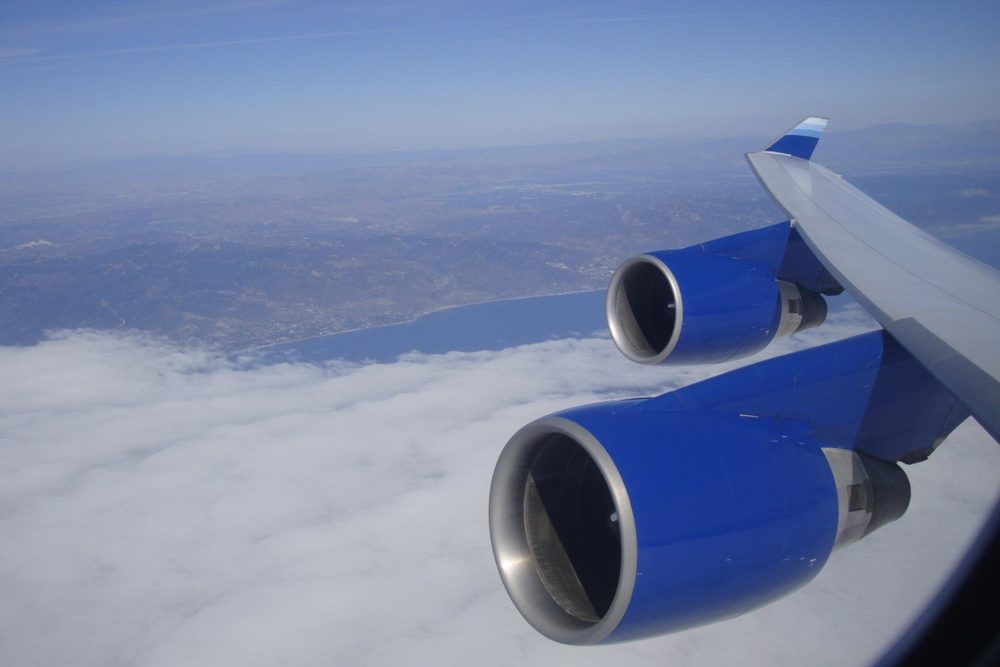
A century later the Needle is handed to a new keeper at thirty-eight thousand feet, and the chase begins: the Airbus A380 she calls the whale who learned to fly, a Cessna at dawn over the coast, the day Concorde came to Kona, and the Space Shuttle Endeavour rolling down a Los Angeles boulevard.
Twenty-one real photographs by Robert Goldston, Sr., each paired with a story that blends aviation lore, true detail and pure invention.
Every photograph in this book is real, taken by Robert Goldston, Sr. on his travels. The stories are fiction, written as a gift to the photographs; the italic line under each story title tells you what the photograph actually shows.


Prologue
In 1919 a Honolulu clockmaker named Tobias Wren melted down the propeller hub of the first airplane ever to cross the Kaiwi Channel and cast from it a single brass needle, no longer than a finger. He set it on a pivot of clear crystal and closed it in a case the size of a pocket watch. Then he made a claim that nobody believed: the Needle would never point north. It would point toward the next great machine of the sky.
With the Needle came a ledger, a narrow book bound in sailcloth. Whoever carried the Needle was to follow where it pointed, find the machine waiting there, and write one line for it in the Ledger. Then they were to hand both on.
For a hundred years the Needle passed between pilots, mechanics, flight engineers and people who simply could not stop looking up. It rode in galley drawers and flight bags and the breast pockets of captains. The Ledger filled one line at a time.
These pages follow its most recent keeper. She did not go looking for the Needle. It was handed to her at thirty-eight thousand feet by a stranger who was about to retire.
Three spreads from the book: the photograph on one page, its story on the other.
No. 4No. 4
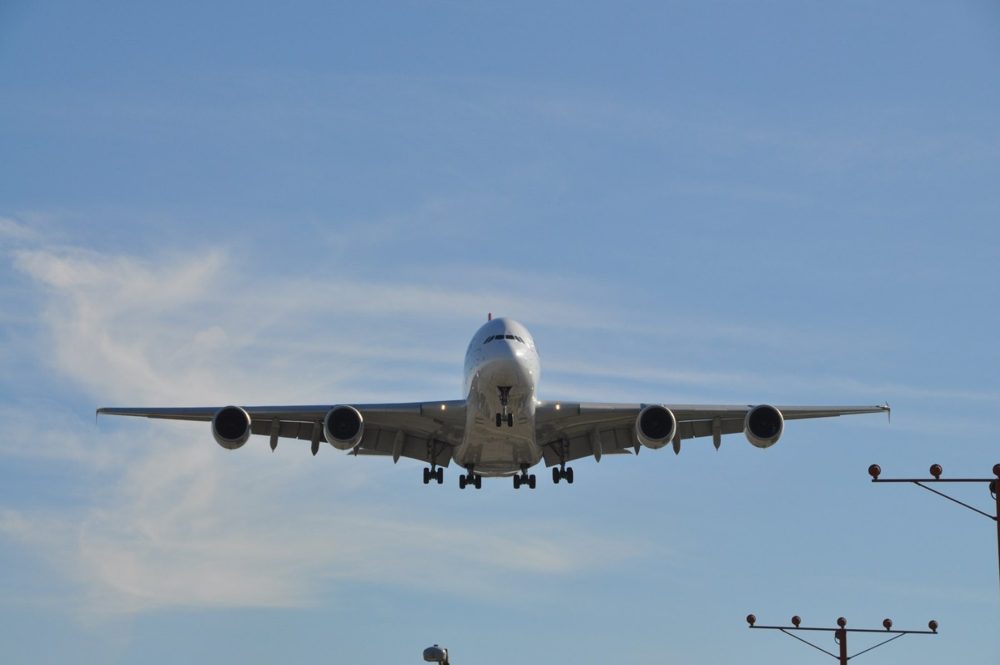
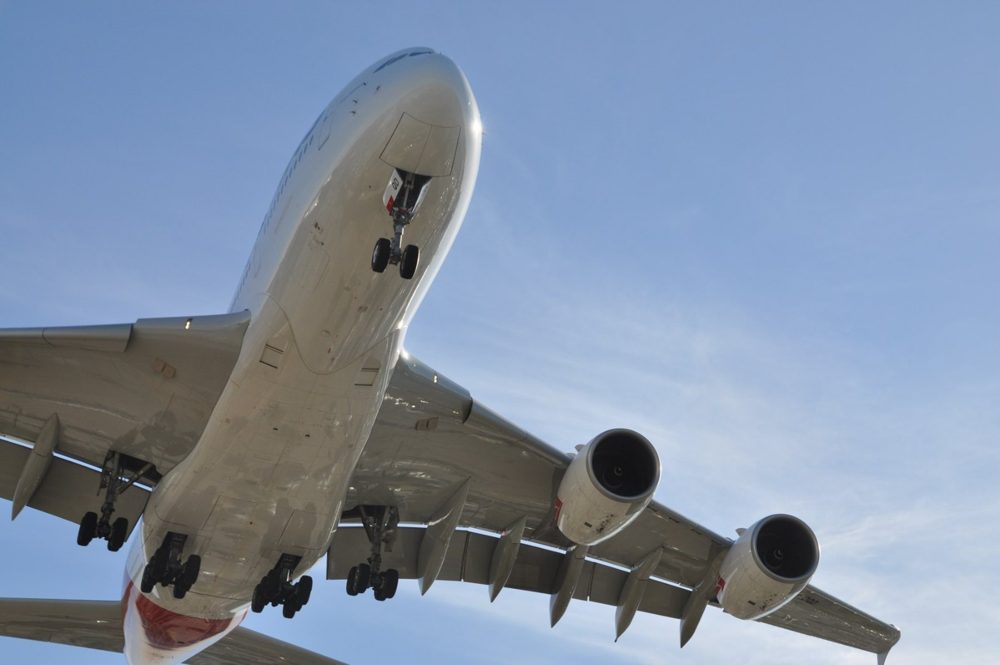
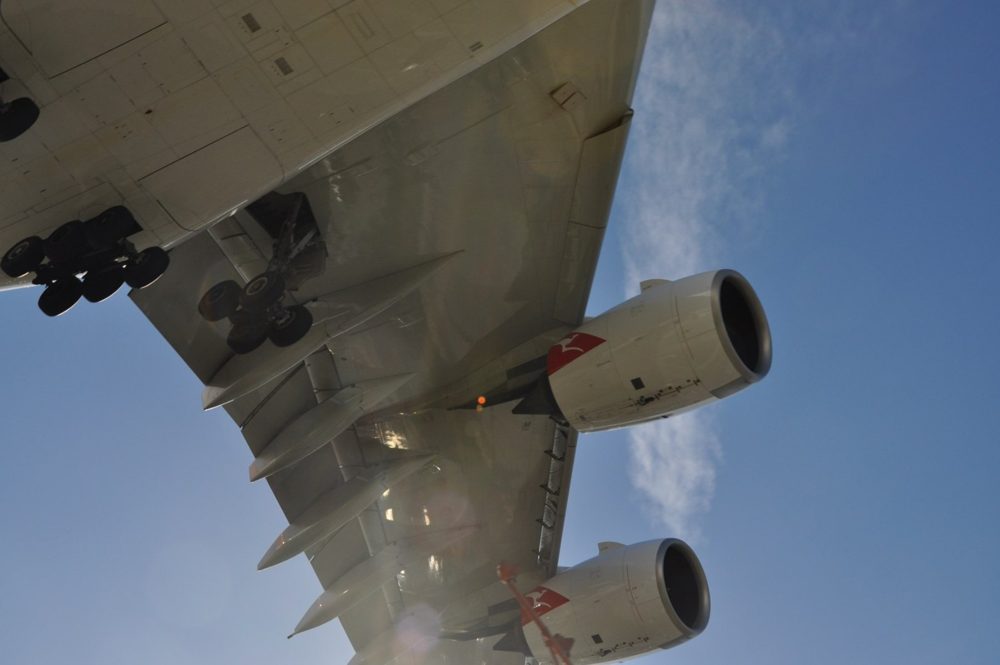
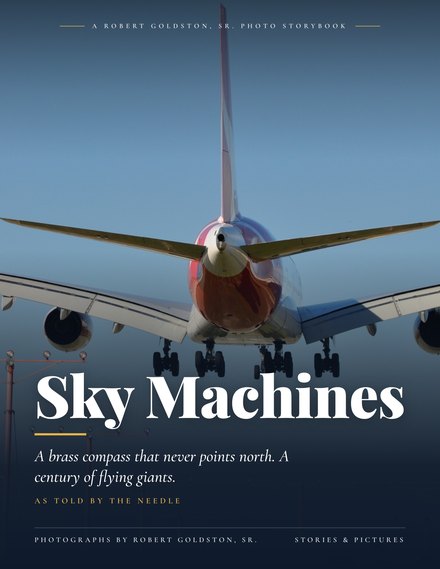
Airbus A380 on approach: four engines, gear down, two full decks.
When the first A380 came out of the hangar in Toulouse in 2005, people soon took to calling it a whale. It was the largest passenger airliner ever built, with two full decks running nose to tail and a wing big enough to park seventy cars on.
A footnote in the Ledger, written in a cramped hand, claims that one of the test flight crew carried a sealed envelope addressed to “the next keeper,” to be opened if the whale flew. She did, and the envelope was never mentioned again.
Noa bought a ticket back to Los Angeles. The Needle pointed east the entire flight, steady as a level, and it led her to the end of a runway where a chain-link fence meets a strip of grass. Spotters have gathered there for decades. Their cameras look up into the descending wing of whatever is coming in.
… the story continues in the book.
No. 13No. 13
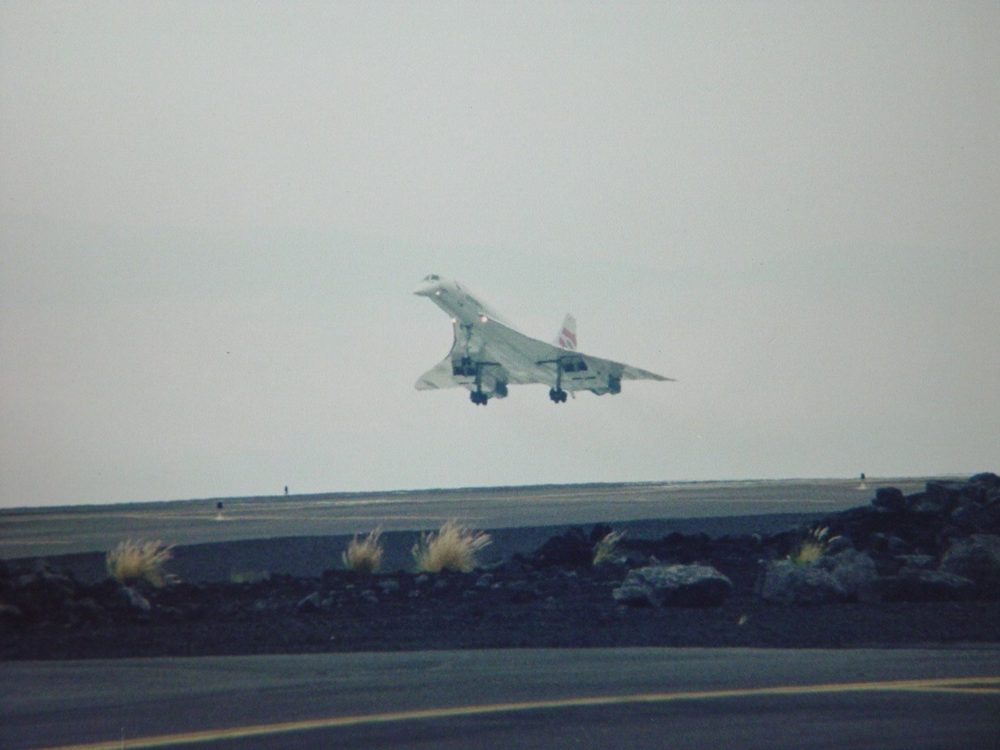
Concorde descending over the lava fields at Kona, Hawaiʻi Island.
Concorde was never meant to cross the Pacific. It was built for the North Atlantic, London and Paris to New York, three and a half hours at twice the speed of sound. But on rare round-the-world charters, the white arrow came to the islands, and at least once it came to Kona.
Bea was there. The whole town was there. People drove up from Kailua and down from Waimea and parked along the highway. They stood on the black lava fields in the heat to watch for it.
It came in low and slow from the west, nose drooped and wings like a thrown paper dart, with its engines making a sound Bea said she felt in her teeth. It crossed the lava with the fountain grass shaking in its wake, and for a moment it looked like something that had flown out of the future and was not sure it was allowed to land.
… the story continues in the book.
No. 19No. 19
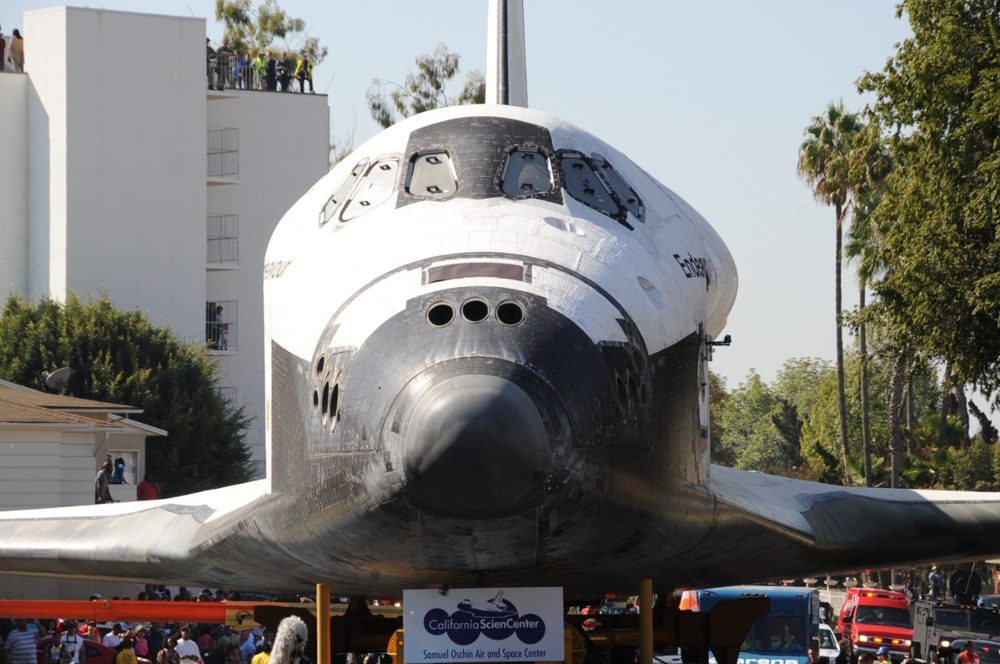
Space Shuttle Endeavour moving through the streets of Los Angeles, October 2012.
In October 2012, Endeavour made its last journey. It was not into orbit but twelve miles through the streets of Los Angeles, from the airport to the California Science Center. The trip took three days. Traffic lights came down. Hundreds of trees were removed and later replaced. The orbiter crept past houses, gas stations and doughnut shops at less than two miles an hour, sometimes with only inches to spare.
Crowds lined every block, day and night. People climbed onto rooftops and balconies and the tops of buildings to see it.
The Needle led Noa there. It pointed up for days, and then, the morning she arrived on the route, it came down level and pointed at the black nose of the orbiter as it turned the corner past an apartment building. Hundreds of people stood on the roof above it, in perfect silence.
The ground trembled. Children went quiet.
… the story continues in the book.
48 pages, 21 photographs, one storyteller. Digital PDF for $2.95.
Choose one book or the whole series.
Check out securely with PayPal or a card.
Download links appear the moment PayPal confirms your payment, with a personal download page you can bookmark.