Photo Books · Digital PDF
As told by Pip
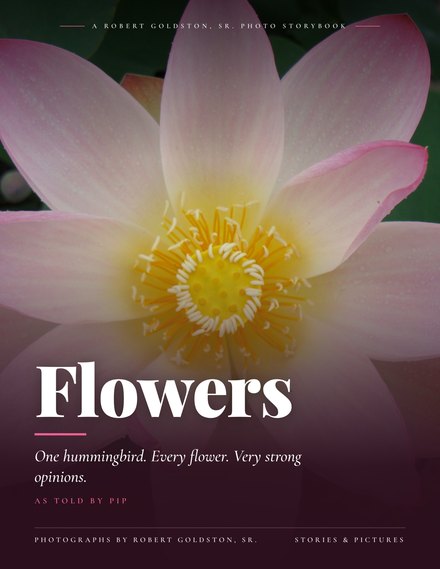
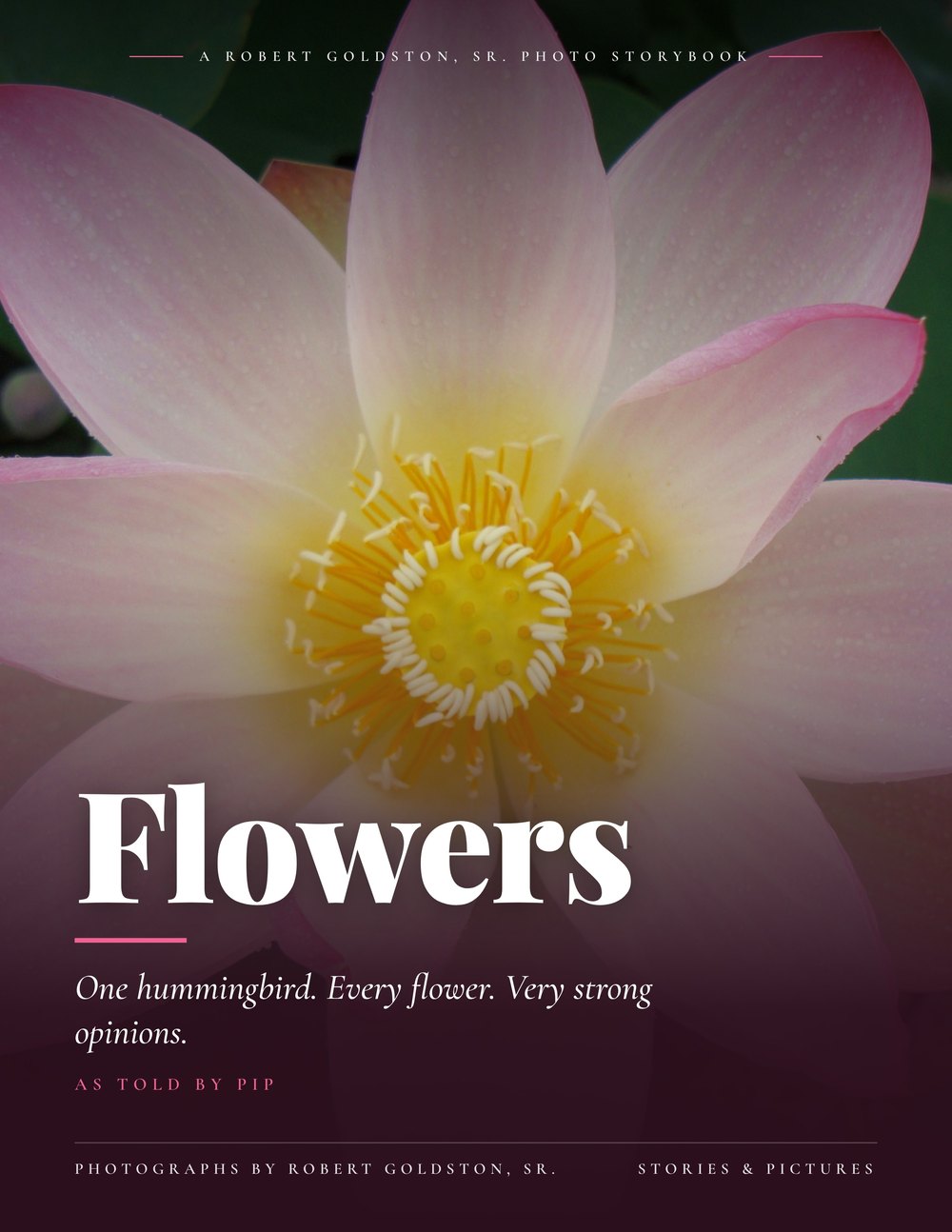
The world's flowers, reviewed by a very small, very opinionated hummingbird.
Pip the hummingbird weighs less than a nickel and keeps a notebook called the Nectar Review, where every flower gets a score out of five drops. Hummingbirds live only in the Americas, so no lotus in Asia has ever had a visit. Pip decides this is a scandal, tucks herself into a flower crate and sets off to fix it.
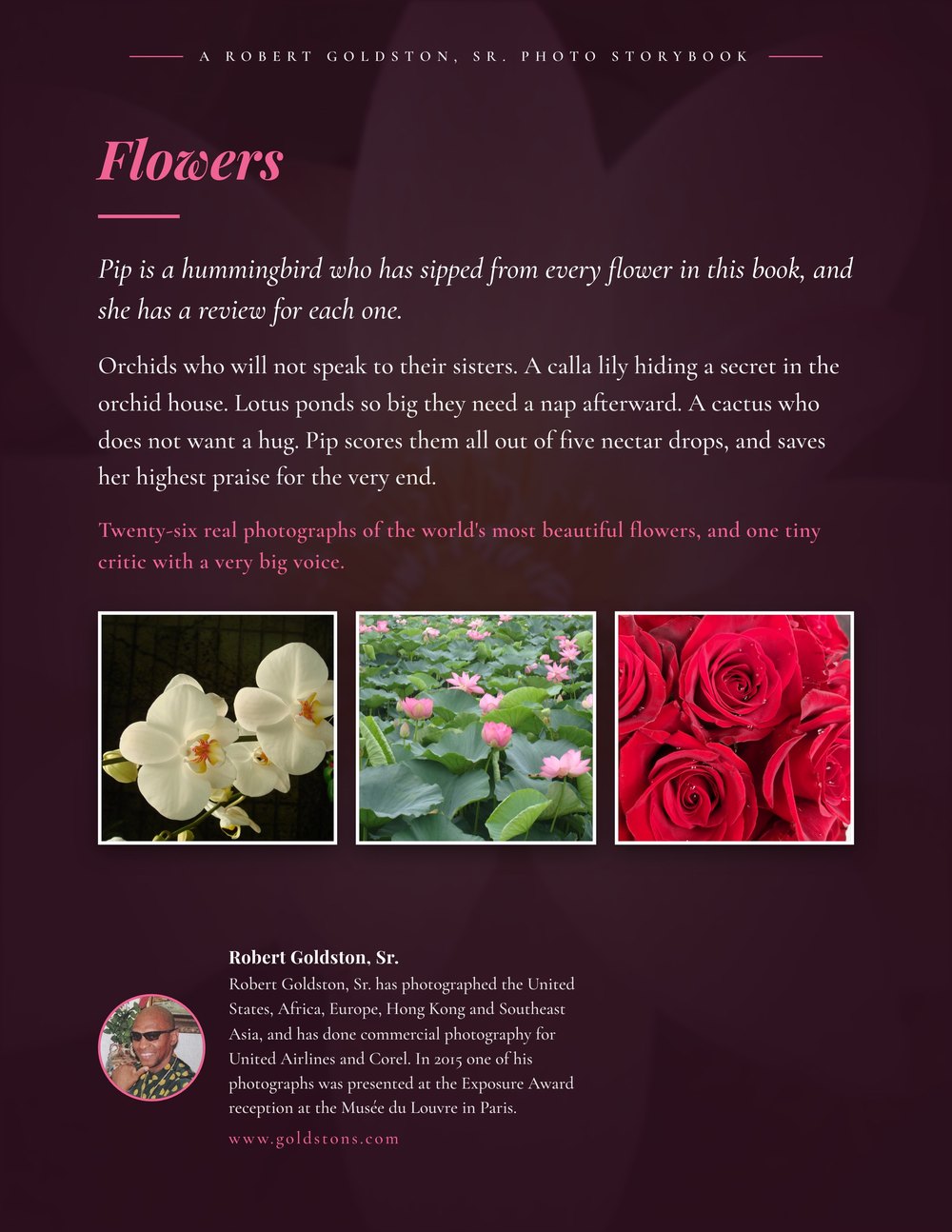
Orchids and lotuses, ballerina fuchsias and lady's slippers, hibiscus, heliconia, roses, and the cactuses she is still not ready to talk about: Pip sips from them all and tells you exactly what she thinks.
Twenty-six close-up flower photographs by Robert Goldston, Sr., each with its own review.
Every photograph in this book is real, taken by Robert Goldston, Sr. on his travels. The stories are fiction, written as a gift to the photographs; the italic line under each story title tells you what the photograph actually shows.


Prologue
My name is Pip. I am a hummingbird. I weigh less than a nickel, my heart beats more than a thousand times a minute when I am excited, and I am almost always excited. I can fly forward, backward and upside down for short distances. I mention this so you understand that I am qualified.
For my whole life I have kept a notebook called the Nectar Review. Every flower I visit gets a score out of five drops. Five drops is perfect. One drop means I left politely and did not come back. Flowers pretend not to care about their scores. Flowers care very much.
Here is something the flowers of the world have always held against my family. Hummingbirds live only in the Americas. A lotus in Asia has never once had a hummingbird drop by for a chat. I decided that was a scandal, and I decided to fix it.
So I packed my notebook, tucked myself into a tea towel in the corner of a flower crate, and went to see them all. Orchids and lotuses. Ballerinas and slippers. Cactuses, which I will get to, and which I am still not ready to talk about.
I have sipped from every flower in this book. I have opinions about all of them. I have also been sworn to secrecy about one of them, and I am a very good secret keeper. Mostly.
Three spreads from the book: the photograph on one page, its story on the other.
No. 1No. 1
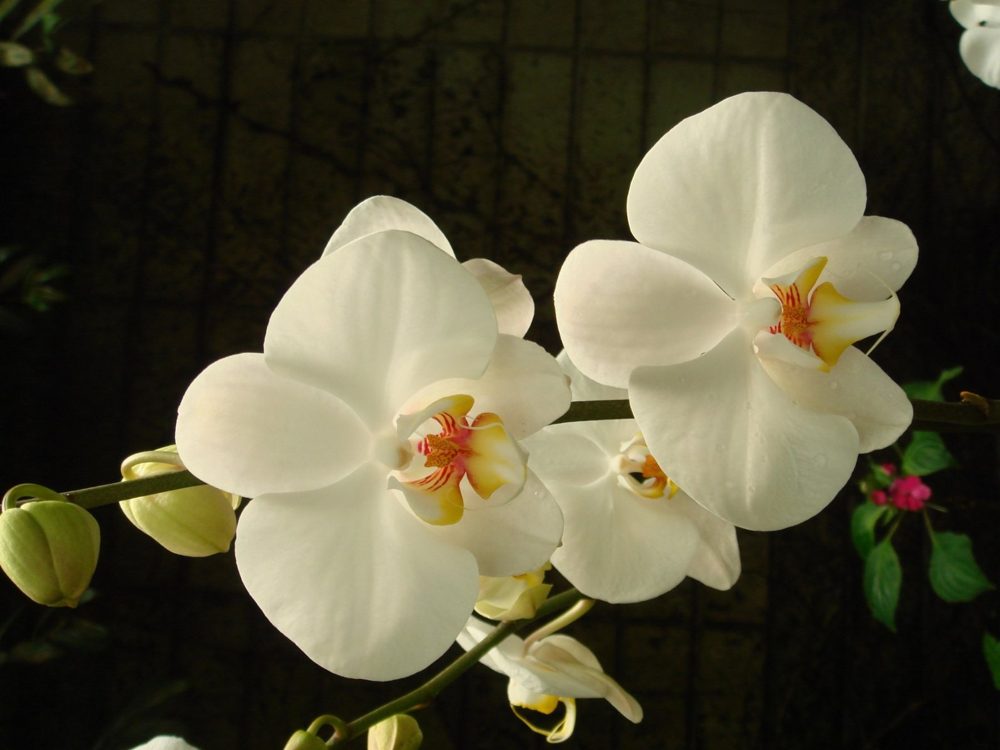
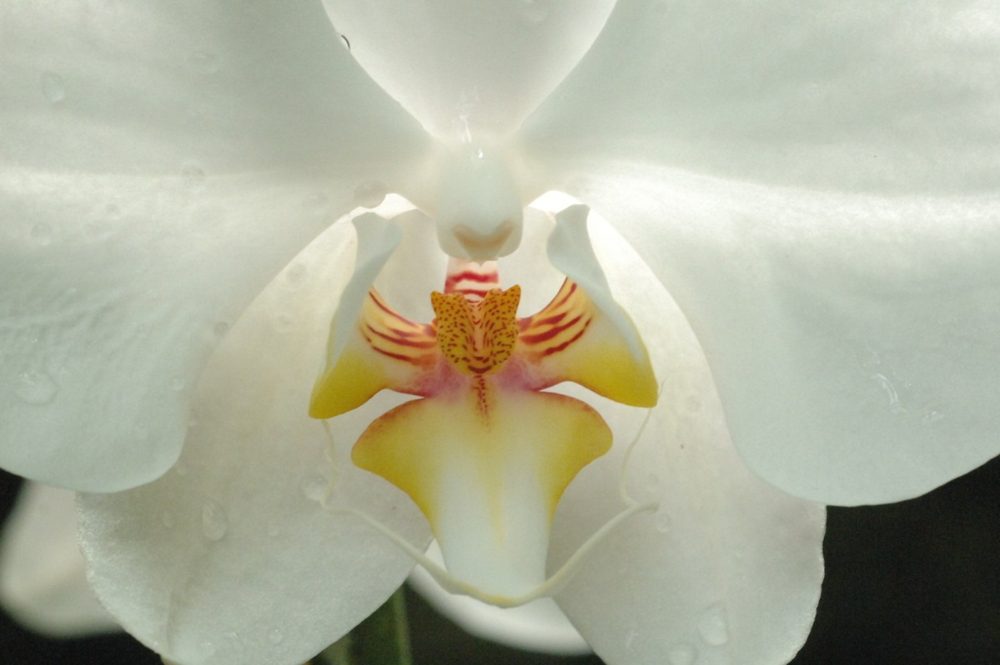
A spray of white moth orchids with yellow and red centers, flower buds still closed along the stem.
Every garden has a diva. In the conservatory where I was hatched, the diva is a white moth orchid called Madame Blanche, and she would like you to notice her now, please.
Look at her. Five blooms on one arching stem, every petal pressed and pure, and three green buds waiting in the wings like understudies. Botanists named her kind the moth orchid because the flowers were thought to look like white moths in flight. Madame Blanche finds that comparison insulting. She has never been near a moth and does not intend to start.
Every morning at nine the conservatory doors open, the visitors come in, and Madame Blanche tilts her stem a little toward the light. Every morning they stop, and they gasp, and somebody says, “Oh, look at that one.” She pretends to be surprised. She is never surprised.
… the story continues in the book.
No. 6No. 6
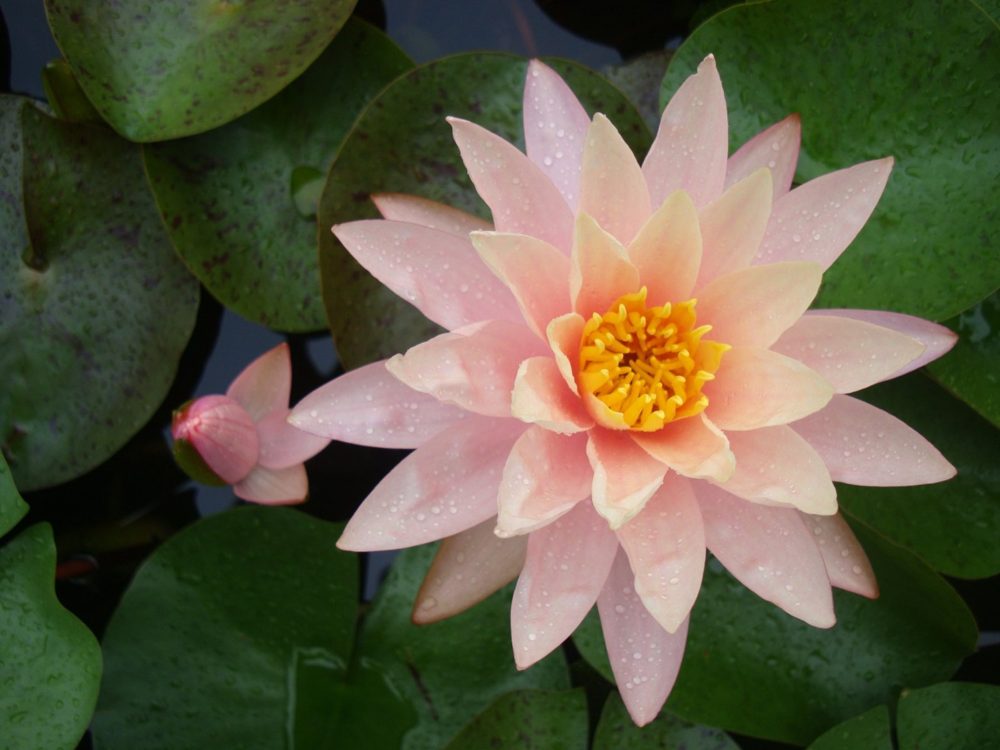
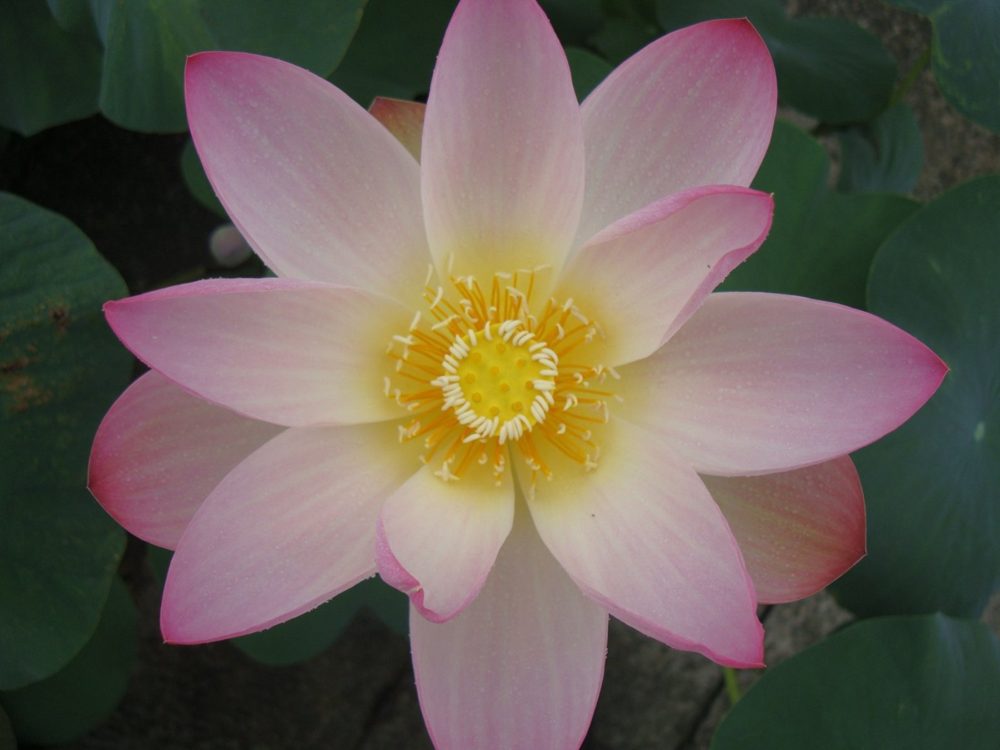
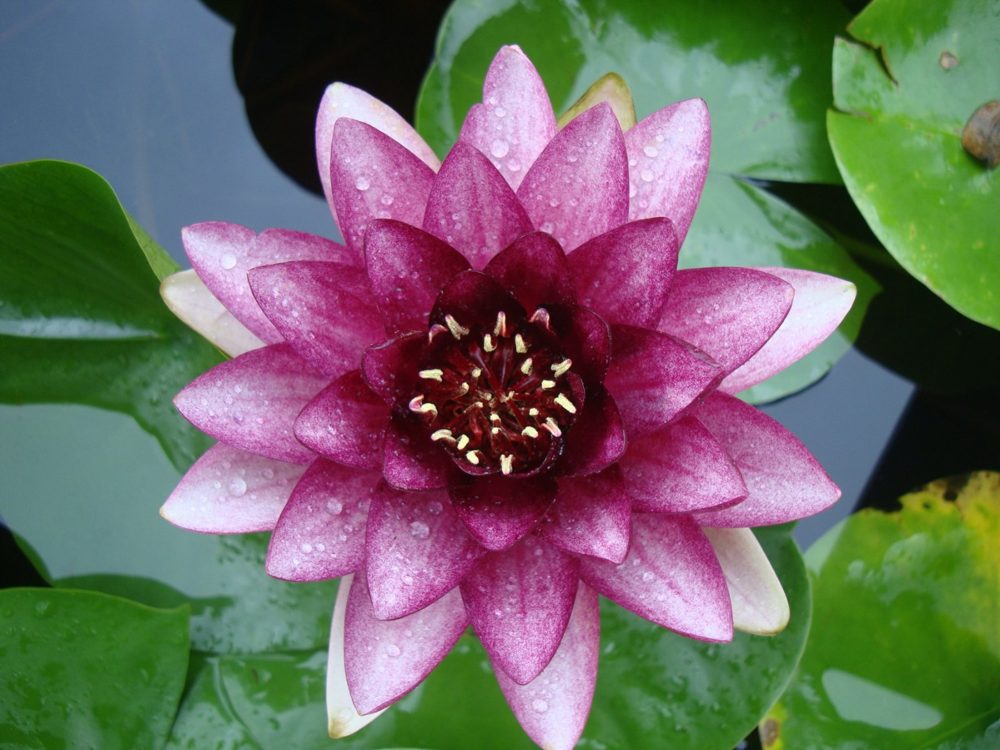
A lotus flower fully open, its pink-tipped petals around a golden center ringed with yellow stamens.
Nym told me that if I wanted to see real royalty I should cross the pond and visit the lotus. So I did, carefully, without landing on anything.
The lotus was wide open, every petal white at the base and blushing pink at the tip. In the middle sat a golden center like a little flat-topped crown, ringed with a fringe of yellow stamens. It glowed. I do not know another word for it. Standing in front of that lotus felt like standing in front of a small, polite sun.
I said so, and the lotus said, “Thank you. Would you like to warm up?” This is a true thing about lotuses. Some of them can warm their own flowers, keeping them toasty even on a cool morning, which beetles and bees find very welcoming. So the lotus really is a sun with good manners. It keeps itself warm and then it shares.
… the story continues in the book.
No. 22No. 22
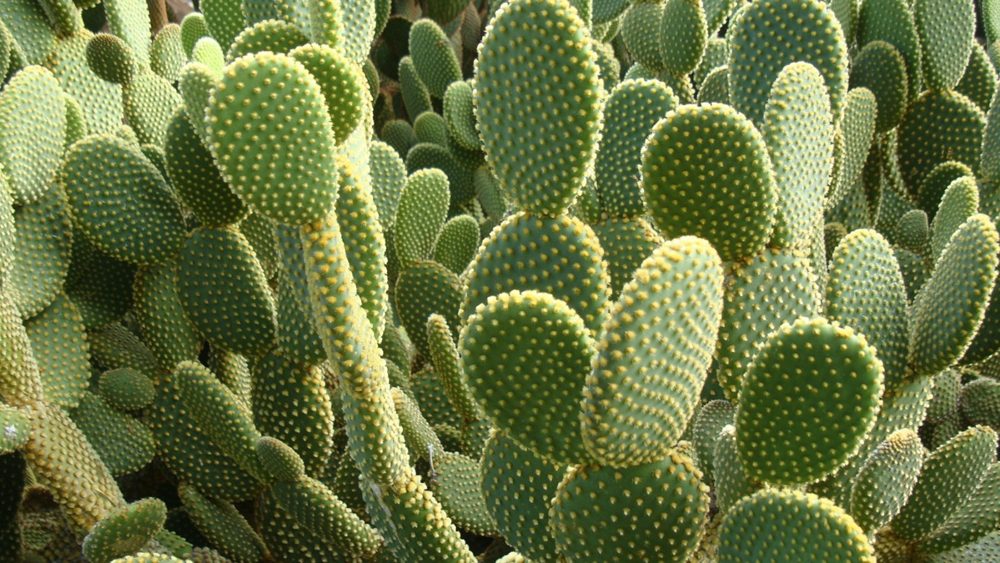
A dense stand of prickly pear cactus, its oval pads dotted with tufts of fine bristles.
The desert was hot and dry and bright, and the first thing I saw was a whole crowd of prickly pear cactus. Paddle on paddle on paddle, round green pads stacked up on each other like a pile of pancakes. Every pad was dotted with soft little polka dots. They looked so friendly. They looked, if I am honest, cuddly.
I am an affectionate bird. After the queen and the Colonel and the ballerinas, I was in a hugging sort of mood. I flew straight in and gave the nearest pad a big warm hug.
Those polka dots are not soft. They are tufts of tiny bristles, very fine and very barbed, and they come off at a touch and stay in whatever touched them. I spent the rest of the afternoon picking them out of my chest feathers.
… the story continues in the book.
59 pages, 26 photographs, one storyteller. Digital PDF for $2.95.
Choose one book or the whole series.
Check out securely with PayPal or a card.
Download links appear the moment PayPal confirms your payment, with a personal download page you can bookmark.
As told by the Needle
A brass needle that never points north, and the great machines it leads to.