Photo Books · Digital PDF
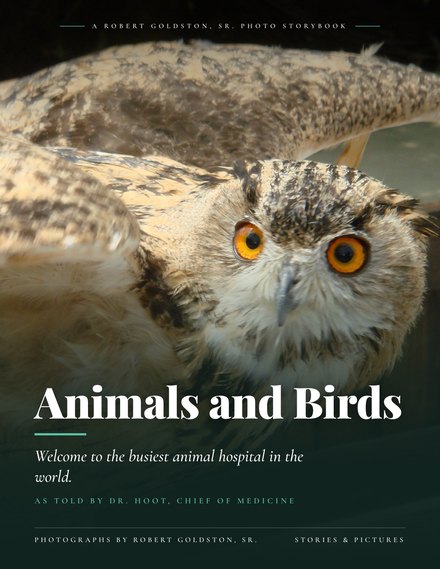
As told by Dr. Hoot, Chief of Medicine
Dr. Hoot, chief of medicine, will see you now. Please do not touch the patients.
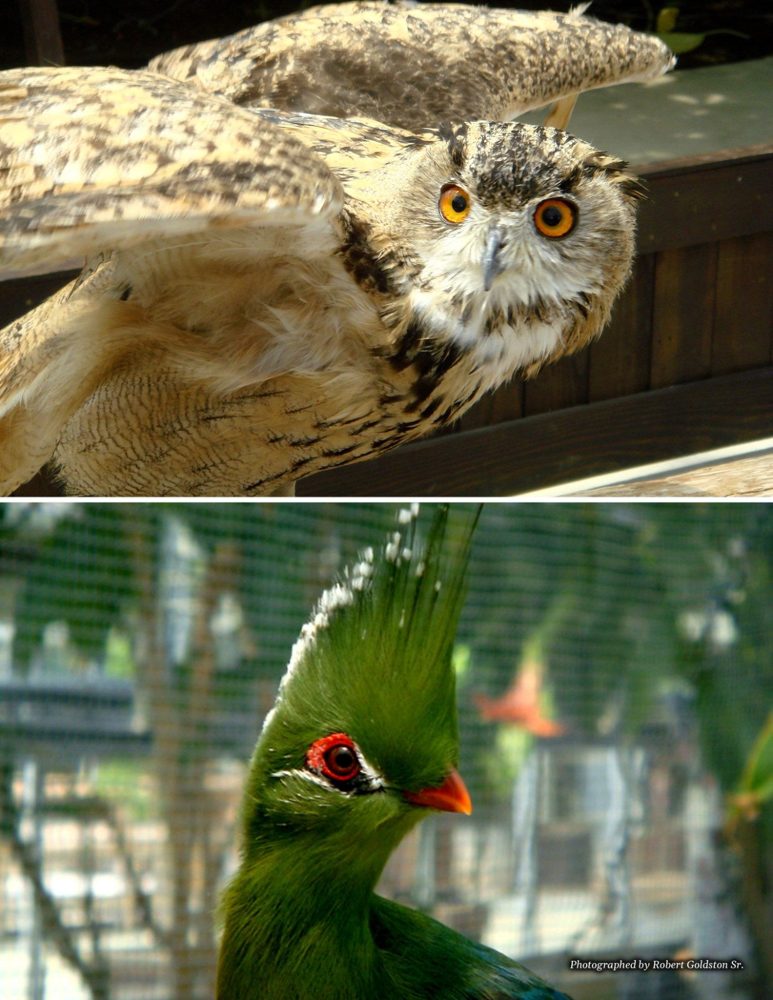
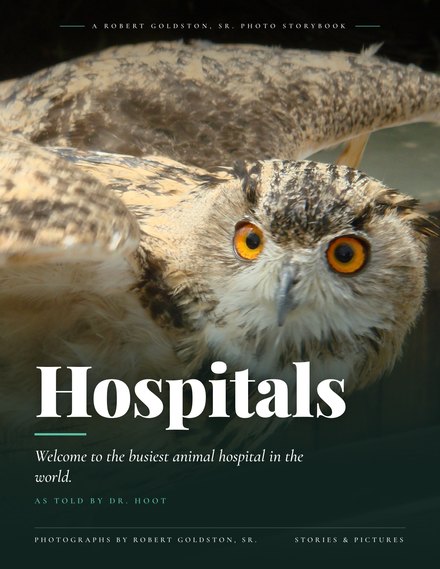
Dr. Hoot, a Eurasian eagle owl, is chief of medicine at the busiest animal hospital in the world, and every one of his patients is a drama queen.
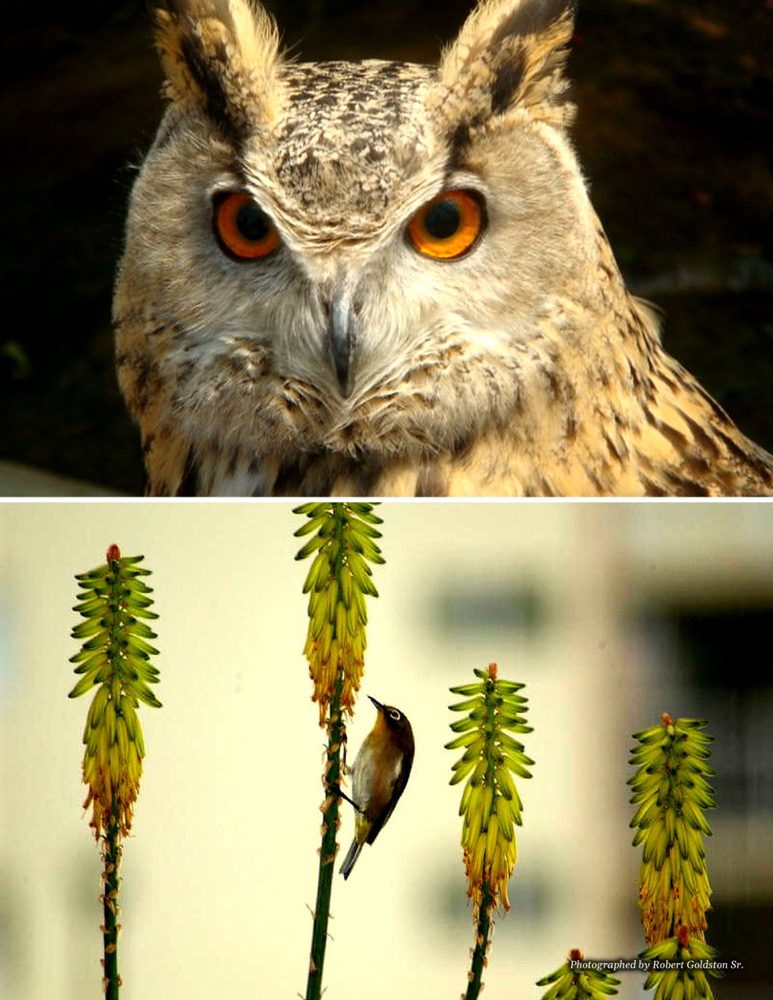
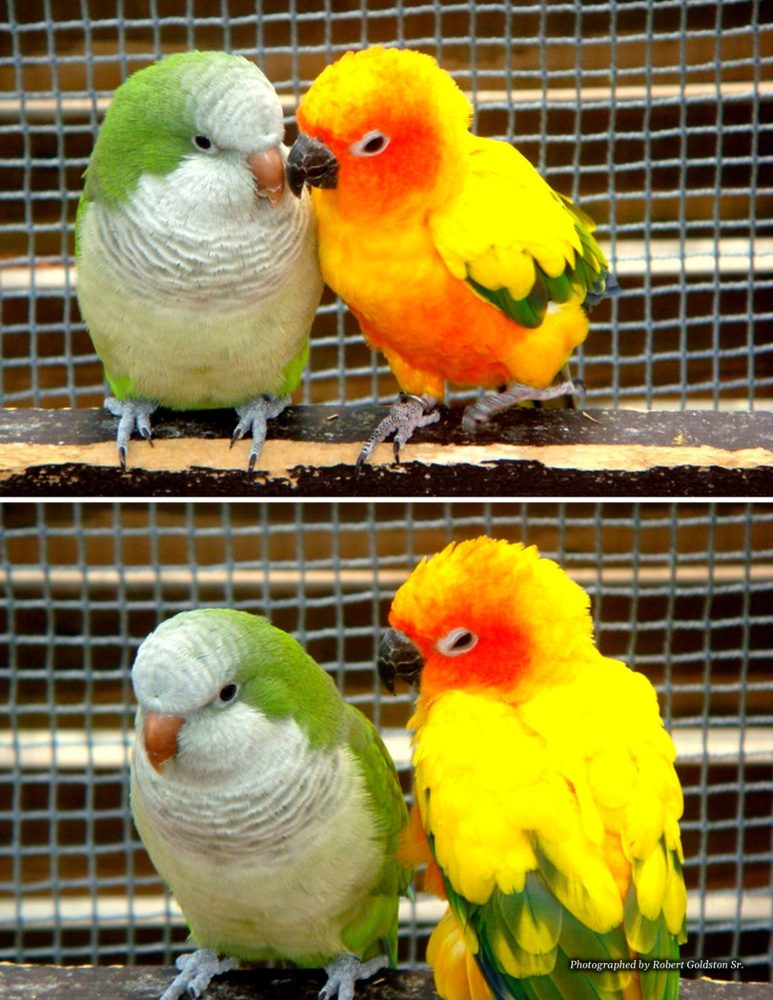
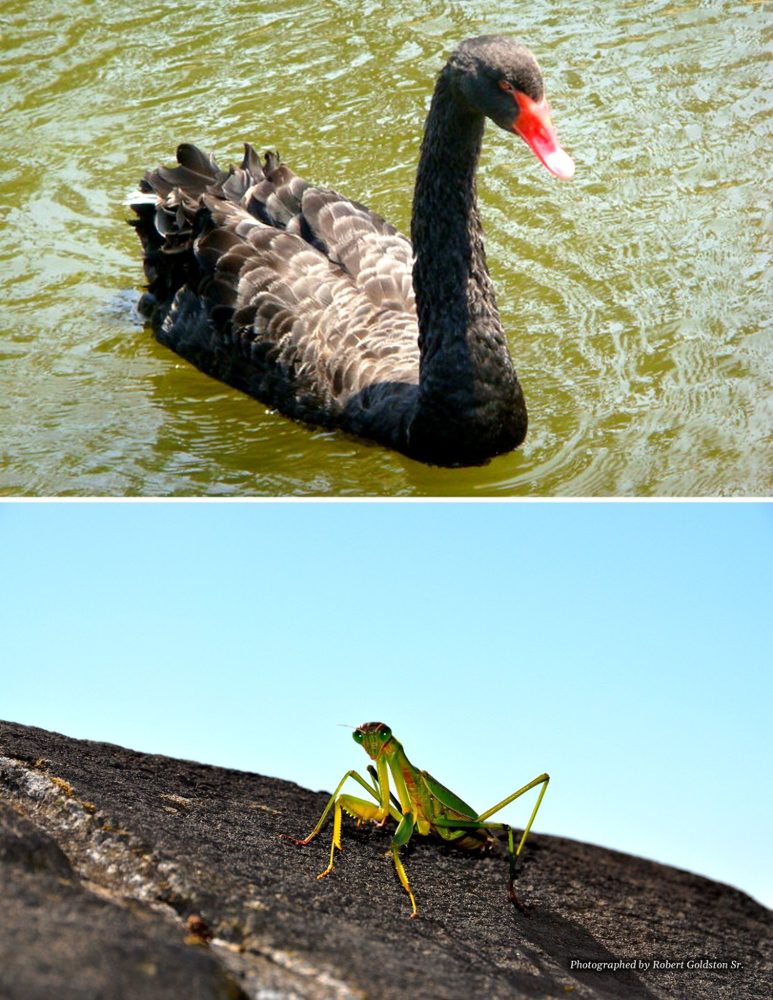
Lovesick parakeets who refuse to be discharged. A peacock who needs three mirrors. Swans in adjoining rooms who are not speaking. A mantis who may be from another planet, a crocodile who will not open wide, and a cat and a rat who are best friends.
Twenty-seven real photographs of the animal kingdom at its most dramatic, and one very tired doctor.
Every photograph in this book is real, taken by Robert Goldston, Sr. on his travels. The stories are fiction, written as a gift to the photographs; the italic line under each story title tells you what the photograph actually shows.


Prologue
My name is Dr. Hoot. I am a Eurasian eagle owl, one of the largest owls in the world, and I am the chief of medicine at the busiest animal hospital on the planet. I have orange eyes, a medical degree and no patience. Two of those I was born with.
Our hospital has no walls to speak of. Its wards are gardens, aviaries, ponds, beaches and treetops, and they stretch about halfway around the world. Patients fly in, swim in, waddle in and occasionally fall in. Hardly any of them are actually sick. Every one of them is convinced they are dying, in love or famous, and some insist on all three.
I carry a clipboard. On it is a chart for every patient, and at the bottom of every chart is a box marked DISCHARGED. In my whole career I have never filled in that box. Patients come to my hospital. They do not leave.
This is the story of one long season on the wards. It begins on the busiest opening day we have ever had, and it ends, against all medical odds, with a signature in that box.
Three spreads from the book: the photograph on one page, its story on the other.
No. 1No. 1
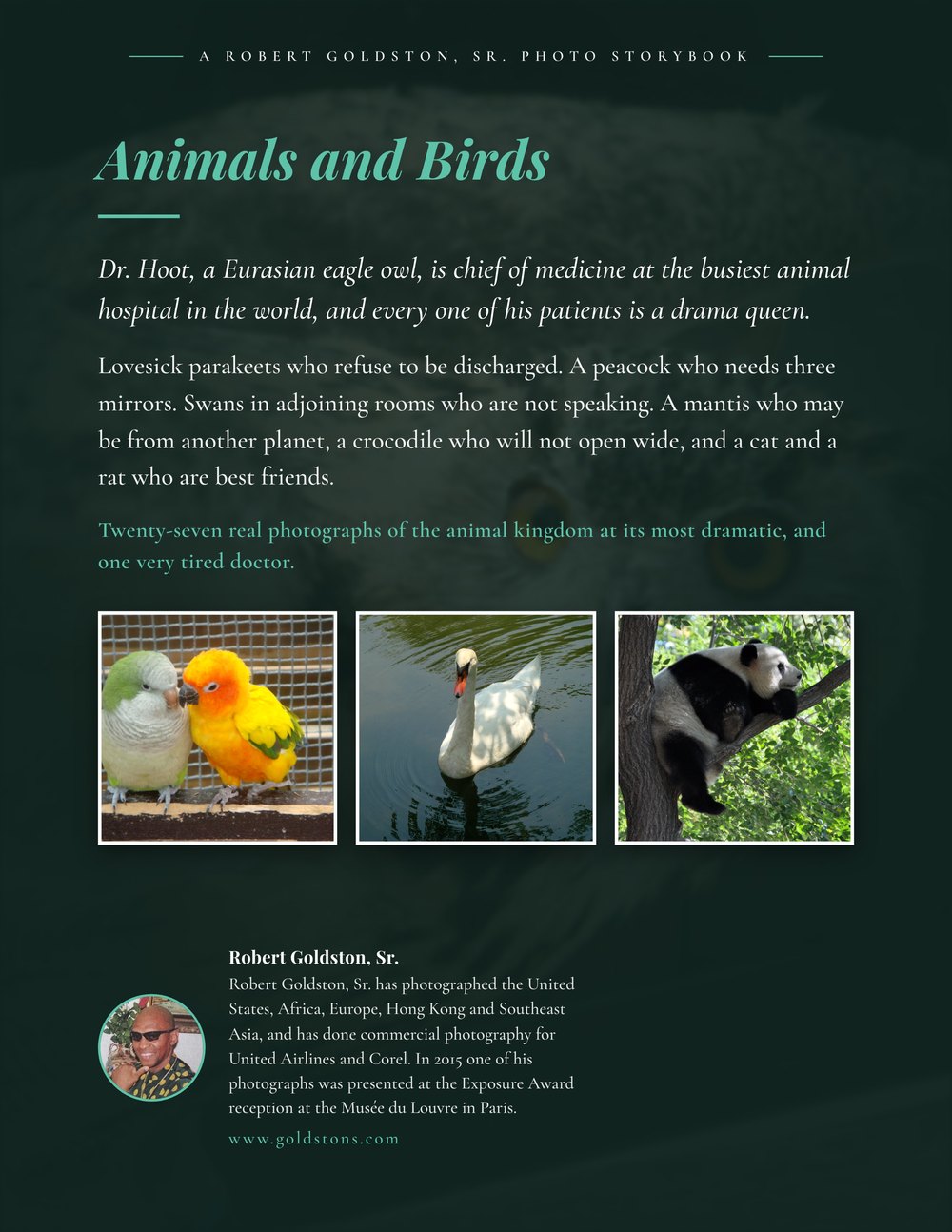
A Eurasian eagle owl with orange eyes and raised ear tufts, looking straight at the camera.
Every hospital hangs a portrait of its chief in the lobby. The board insisted. So on the evening before opening day, a quiet man with a camera came to take mine.
“Smile,” he said. I explained that owls cannot smile. Our faces are built for listening, not grinning. The round disc of feathers around my face gathers sound and funnels it toward my ears, which are hidden at the sides of my head. The two tufts on top are not ears at all. They are feathers, and I raise them when I am being serious, which is always.
“Look this way, please,” he said. I turned my whole head to look at him. My eyes are fixed in their sockets, so I cannot roll them. This is a great loss to a doctor who hears as many excuses as I do.
He pressed the button once and lowered the camera. “That's the one,” he said.
… the story continues in the book.
No. 9No. 9
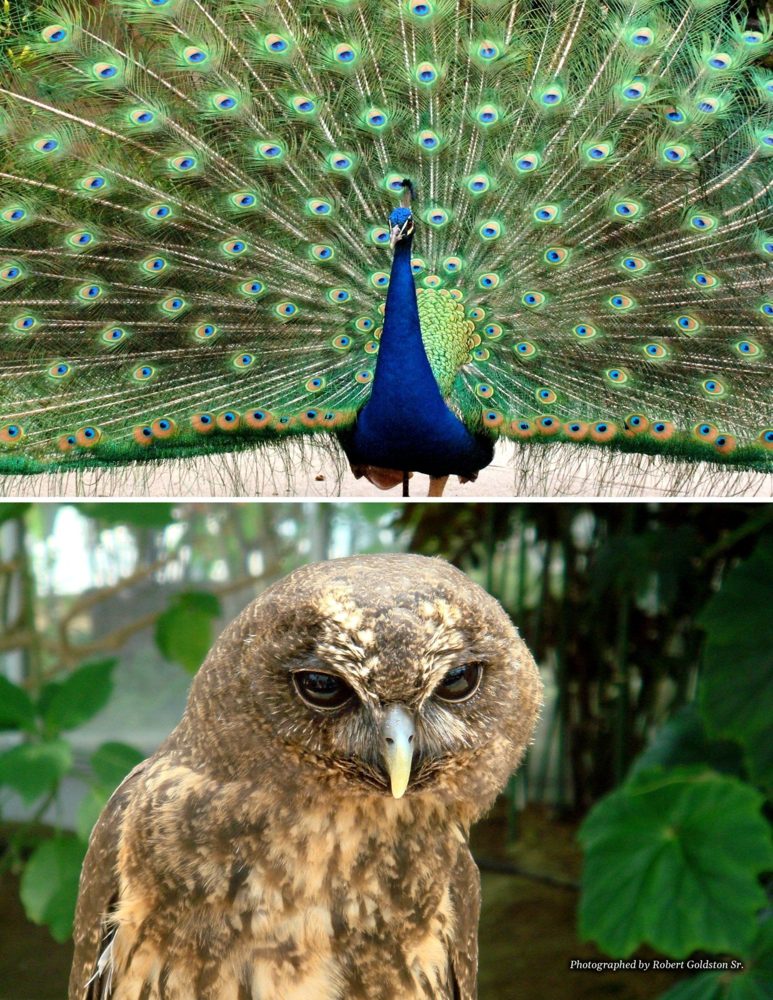
A peacock displaying his full tail fan, covered in eyespots.
By the next morning Reginald had three mirrors. I do not know where he got them. Nobody on staff will admit to anything.
He stood in the middle of the observation ward with his tail raised in a full fan behind him, a great green and bronze wheel covered in eyespots. Each eyespot had a dark blue center ringed with bronze and green. Scientists think peahens judge a peacock partly by his display. Reginald did not need a scientist to tell him that.
“Doctor,” he said. “Be honest. Ain't I beautiful?”
I am a professional. I looked at the fan for a long time. It was, I have to admit, beautiful. When he shook it, the whole thing shimmered and rattled with a sound like rain on a tin roof.
“Clinically,” I said, “you are very healthy.” “That's not what I asked.”
… the story continues in the book.
No. 25No. 25
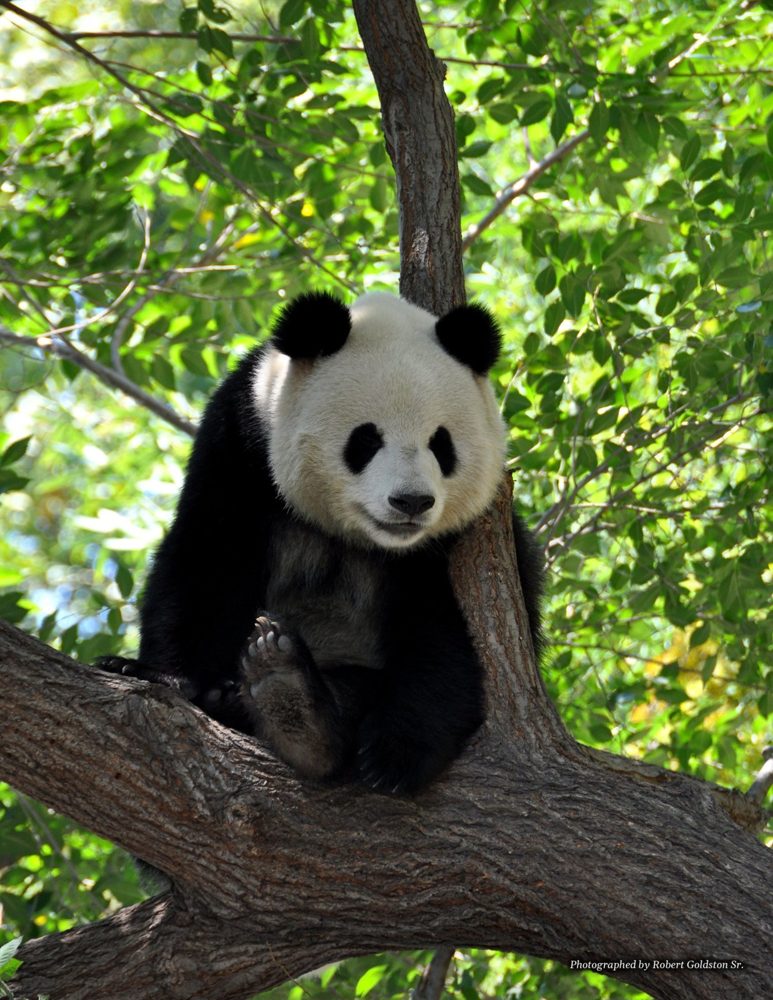
A giant panda sitting in the fork of a tree, looking down toward the camera.
There was one ward I had never been allowed to enter, and in the last week of the season I received an invitation. Well, half of one.
The panda ward is a grove of trees at the edge of the hospital. Its patient was a giant panda named Bao, admitted for exhaustion. Pandas live mostly on bamboo, which is not very nourishing, so they must eat a great deal of it and rest a great deal in between. Bao took the resting part seriously.
She was sitting in the fork of a tree, her back against the trunk and one hind foot up on the branch, like someone who had found the perfect armchair and would defend it with her life. The man with the camera had found her first. He stood at the bottom of the tree, raising his lens.
Bao looked down at him. She did not growl. She did not move. She held his gaze with her black eye patches and her round, perfectly calm face. “You,” she said. “Stay there.”
… the story continues in the book.
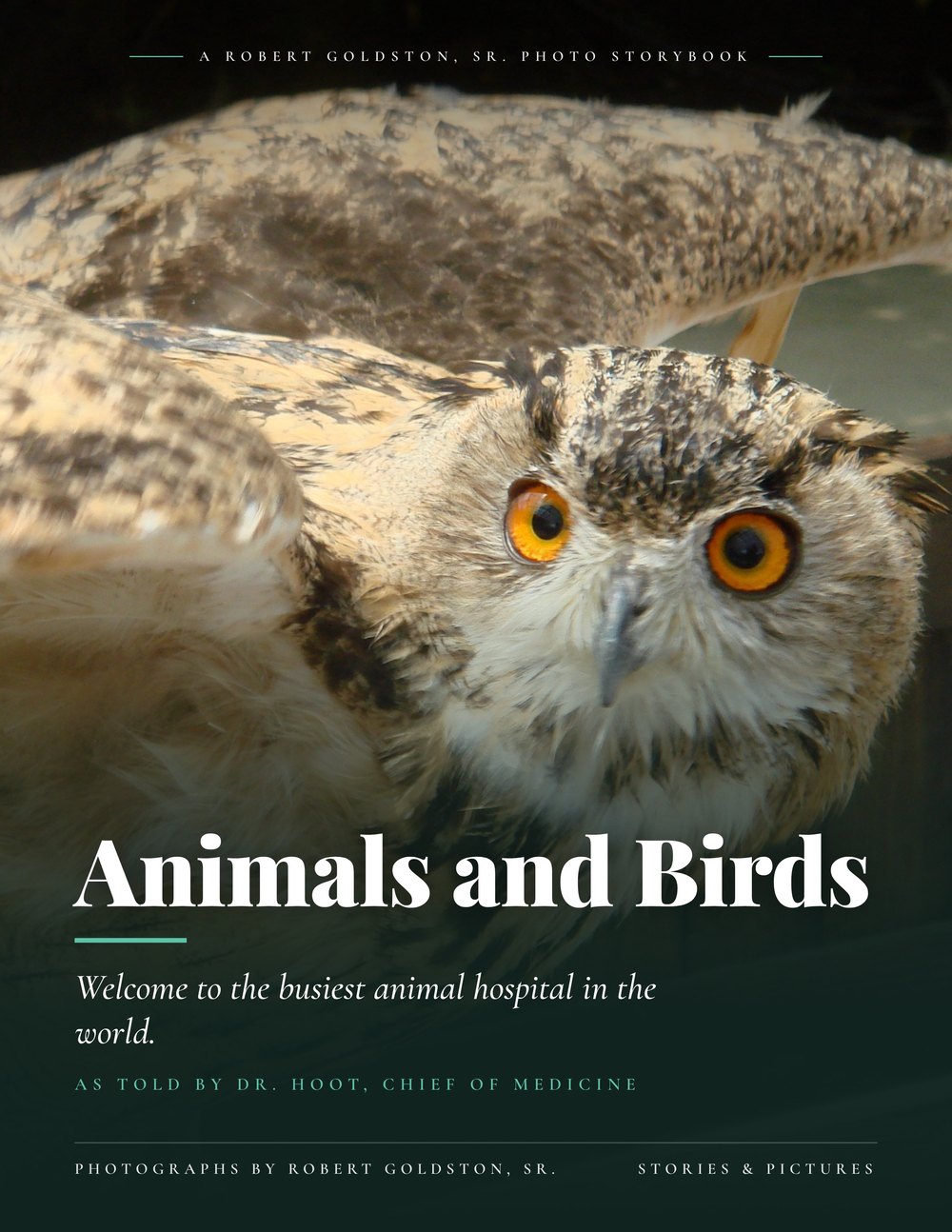
43 pages, 27 photographs, one storyteller. Digital PDF for $2.95.
Choose one book or the whole series.
Check out securely with PayPal or a card.
Download links appear the moment PayPal confirms your payment, with a personal download page you can bookmark.
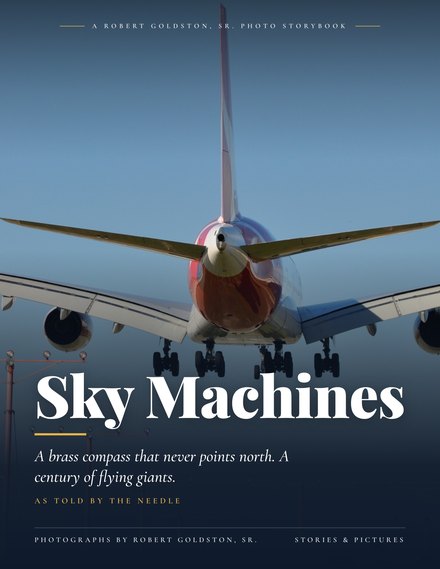
As told by the Needle
A brass needle that never points north, and the great machines it leads to.
As told by Carmine
Everybody walks on me. I remember every pair of shoes.
As told by Press, the Backstage Pass
Decades of award nights and concerts, seen from backstage.
As told by Old Brass, the ringside bell
The sports pages, as heard by the ringside bell.